BACKPACKING DIARY 2003 - 2004

Diary itinerary can be found
here.
Diary
arranged by topic can be found
here.
2003
JULY
8
Well.
Nine days into my year of living dangerously and things are going swimmingly
cool. I am averaging $17 per day including hot showers, cable TV, all transport
and cold beer. I have
just returned from
backpacking near Iryua. In
two days I leave for Arica, Chile, and Lauca National Park.
Already my past
life---the last ten years---seems as a dream. It was truly the most formative
time I had ever had. This year of travel is a transition, perhaps---but to what?
Only God knows, and He has not told me---yet. There will be surprises.
Credence
Clearwater is playing on a CD at the internet cafe where I am typing. While
in high school 33 years and one thousand summers ago I memorized every one of
their songs for guitar. I still remember, and fantasize yet about playing Green
River on my
Parker Night Fly
into a loud---a very loud---Fender amp. Ah...Heaven!
Which reminds me: I miss
the guitar. I have not played for almost two years---planning this adventure,
finishing up at Lincoln and designing my web site having taken up my time.
Another reminder: playing the guitar, teaching, writing and bartending are the
only things I do well. Seems to be enough. Oh...I cook a pretty mean tuna
casserole.
Bye.


July 11
Here I am in
Arica, Chile, after a 21 hour bus ride from Jujuy. Imagine a being in a vehicle
smaller than a classroom and filled with 50 persons breathing, sweating,
snoring, eating, drinking and urinating for almost an entire day and you can get
a picture of what it was like. Fun stuff! I much prefer buses to flying, though,
as I get a chance to see the land over which I am traveling and to rub elbows
with the locals.
The road followed
and old Inca route across the dry and salty altiplano. There were ruins of an
Inca tambo, which once functioned as a rest stop for the couriers that
the Inca would send down to the coast. Often this was to procure fresh fish for
the Inca. Runners could make the journey from the altiplano to the coast and
back in four days and return with fish wrapped in ice. Not a bad deal if you
were the Inca.
Tomorrow I leave
for some days in the Chilean National Park of Lauca. Much of what I have seen of
it reminds me of the backpacking I have done around Bariloche, Argentina. This
park extends to the Bolivian border and is filled with lakes, high mountains and
animals---including puma. (By the way, the word puma is a Quechua word.)
Bye.
I will turn 50
while in my tent somewhere in Lauca National Park. One is supposed to be wise
and experienced at that age. I cannot wait! That should be exciting!
JULY 18
I
just spent the three coldest days of my life backpacking around the Chilean
town of Putre, a place
that provides access to Lauca National Park. My plan was to walk
across the park, taking perhaps five days or so. Since I came from Arica on
the
Chilean coast, and
Putre is 3500 meters above sea level, I needed to spend some time acclimatizing
before walking around the park, most of which is at 4500 meters and higher.
I
walked out of the town in a bright sun and soon was climbing through a valley
that provided stunning views of two
snow-capped peaks ahead and of Putre now far below me. I set my tent and
prepared dinner. When the sun disappeared behind a rock face the air became
at first chilly, then cold, then absolutely bone-breaking frozen. Inside
the tent was not
much better. My sleeping bag was good to 15 degrees Fahrenheit; the tent was
only a three-season with a lot of netting. I was barely comfortable all night,
and
all the water I had collected had frozen solid. I was effectively trapped in
the tent until the sun appeared the next morning. The next two days were
similar.
My plans for walking
through Lauca were put on hold until I could return with proper gear. A
different bag---the Marmot
Aiguille---for one,
and a full-fledged mountain tent---the
MSR Fury---for another.
But return
I shall, as this area of Chile is some of the most beautiful country I
have ever seen---beautiful, and spectacularly cold, deadly cold.
I am not really bothered
much, as this year-long expedition is mainly for jungles---anything below 3500
meters really. Some of my journeys involve crossing passes at 4500 meters, but
camping far below this. This means that I will not be going to the Cordilleras
Blanca and Huayhuash in Peru, as I am not going to risk freezing again. I am not,
after all, a Canadian.
I leave tomorrow for
Arequipa, Peru to hike the
Cotahuasi
Canyon. It will be warm there, praise God!
I
must have sinned. As I was sitting in a restaurant in Putre early one morning
awaiting breakfast, a
swarm of Frenchmen entered. They were two families, both laden with children.
The silence I was enjoying was broken by the chatter of the French tongue. I
survived.
The next morning there
they were again in my restaurant. Any thoughts of a peaceful breakfast were
destroyed---again.
The bus back to Arica
was French-free, thank you God. Alas! When I checked into my hotel, there they
were in full force.
I can well understand
any Frenchman who wishes to leave his homeland for any reason whatsoever, but
why follow me around? Begone I say!
Anyway,
I will be in Arequipa on Sunday. I will attend Mass and go to Confession
and so expiate my
sins. I pray that by then the French will have returned to their citadel
on the Seine.
July 21
I am finally back
in Peru, my favorite country outside of the USA. Why is this so? To begin...
The music:
There is a style of guitar here called criolla. It is amazingly complex,
and matched with the female voice is a stunning and moving thing to listen to.
There is also much African and Andean influence as well. The guitar is king
here, and rightfully so.
The land:
There are
four distinct regions, all of which were made for backpacking : coastal,
altiplano, the ceja de la selva---literally, "the eyebrow of the jungle,"
that region between 3500 and 500 meters where the land begins its drop to the
Amazon Basin---and the lowland jungle of the extreme north- and southeast. All
has its magnificent charms, yet it is the ceja de la selva that is my
main goal. Here are the many ruins of the Chachapoyan culture, most of which
have not been excavated. This part of Peru has seen the greatest discovery of
"lost cities" in the world. I will write more on the Chachapoyans when I return
from the ceja de la selva.
The food:
Argentina
has the best beef in the world---there is really no competition---but that is
all it has. Peru has a culinary tradition 500 years old, a mix of Spanish,
Indigenous and Creole dishes that compares well with those of Mexico. Try aji
de gallina when in Peru.
If you do
not like it, then go home.
The people:
Peru is a
mix of Indigenous, white and African. All of these contribute to Peruvian
culture in ways more dramatic and impressive than in any other Latin American
nation.
The history:
Peru's
pre-history begins 4000 years ago. All have heard of the Inca (and I have
mentioned the Chachapoyan), but there is more, so much more: Chimu, Moche, Huari,
Tiawanaku.
Catholicism:
I do not
need to explain this, do I?
To state the
matter simply: Peru is the capital of (Spanish) South America. You can never
understand this continent unless you understand Peru.
Bye.
Christs
Anyone who visits a
Catholic Church here whose congregation is mainly Indigenous will immediately be
struck by how Christ is represented. There is blood, and lots of it: it pours
out of His head, His chest, His hands, His feet---and all of it dripping down the
cross. The most shocking Christ I have seen in my life is in the church in Putre,
Chile. He was in agony, with massive cuts dripping blood over His face.
There was hardly any area of His body that was not crimson. A huge mass of
tissue spilled forth from His side; His knees were exposed to the bone; His
knees and hands seemed to twist around the nails driven through them.
Why this grim and
grotesque Christ? Why such dramatic visual effects of the violence inflicted
upon Him by the Romans? We in the West are used to seeing Christ on the cross in
almost peaceful repose, with scarcely any blood coming from His five wounds.
This is our Christ, and represents our view of His suffering.
But what of the
suffering of the Latin American Indigenous? Their Christ must suffer more
than they do in their own lives. Thus the blood, the pictures of torture,
the very visible pain on His face. Now, here is a Christ they can relate to.

August 2
I returned
yesterday from Cotahuasi, Peru, where the deepest canyon in the world lies.
Eight days were spent walking as far as I could into the place. The trail
follows an old Inca communication route. Ruins and ancient terraces abound, and
the entire area is clustered with villages. Quechua is the first language spoken
here, and Quechua-inflected Spanish takes a while to get accustomed to. There
are no roads in the canyon---to say nothing of electricity---and no possibility
of getting around unless you walk. And walk the Indians do: everywhere along the
walls of the canyon are myriad trails going to myriad villages whose names echo
their Inca heritage: Andamarca, Quechualla, Vellinga, Huña---this last being an
extensive set of ruins. I stayed in them one night (how many times does one get
to camp alone in pre-Colombian ruins?) and my imagination---at all times wild
and fecund---ran rife. I
conjured up the ghosts of Inca long dead.
In a few days I
will head to Lima, and then on to the jungles of north-eastern Peru. There are
rumors of lost cities buried somewhere near the Rio Marañon. This area saw some
of the last Inca conquests, and was still in a rebellious state when Pizarro
arrived. These rebels against Inca rule, called Chachapoya ("the people
of the clouds") actually lent aid to the Spaniards, believing that they would
therefore gain their freedom from the Inca. This they certainly did only to fall
under the rule of the conquistadors. Which points out yet again that as soon as
the first European arrived in the New World, all Indigenous civilizations were
doomed. None have survived, yet the people remain, always recalling their past
glory.
Pachamama
The phrase means
"Earth Mother", and it is an integral part of much of the Indigenous belief
system in the Peruvian and Bolivian Andes. Many Westerners come to the Andes and
comment on what they believe is the love of the earth exhibited by the people
here. They fancy that the locals have some higher understanding of the
environment than is possible to Westerners. They delude themselves.
The worship of
Pachamama---Westerners at times identify her with their own goofy idea of an
"earth mother goddess", Gaea---offers no moral code, no sacred books, no
salvation here or in the hereafter. What it is is a propitiatory form of
worship, rather like the religions of Babylon and ancient Egypt. The ancient
peoples of Peru and Bolivia saw their world as harsh, cruel, terrifying and
beyond understanding. The earth they lived on served up death in large doses on
a regular basis. There is scarcely any natural disaster outside of tornados,
hurricanes and the Clintons that did not visit itself upon the Andean peoples.
The only hope as
they saw it was to somehow curry favor with the earth, with Pachamama---which
they identified with the female gender---in the hope that when she again decided
to lay waste to some part of humanity, she might spare those who had performed
services for her. And so an elaborate ritual system developed around
propitiating the goddess to curb her impulse to wreak havoc. (This idea would
be familiar to the characters in The Epic of Gilgamesh.)
And so the Andean
Indian would perform all sorts of ceremonies on all sorts of occasions to this
end. Every time the earth was to be plowed, every time a house was to be built
upon her, he would attempt to pacify the earth-goddess. Today one can see at
these ritual observances alcohol scattered about, llama fat smeared here and
there and the skin of a dead cat tossed around. The usual Westerner who
witnesses these events thus connects them with the childish environmental
clap-trap he was force-fed in grammar school. He declaims, "Oh look how these
Indians love the earth!"
Wrong. The
Indians do not love the earth, they fear her, and for good reason. Case
in point: In 1970 the town of Yungay was buried under millions of tons of mud,
ice and rock. Twenty-thousand people were killed in a few seconds--Pachamama in
action. (The only structure to show through the muck was the bell tower of the
local Catholic Church---showing to all with eyes who the real God is. Those
interested can visit this site today.) This type of thing is a regular
occurrence in the Andes, as are earthquakes, floods, droughts, cholera, typhus,
rabies---a veritable cornucopia of disaster on a Biblical scale.
Pachamama is a
real bitch.
August 8
I leave for
Chiclayo Saturday, there to visit---again---the astounding ruins of Tucumé. From
there on to Chachapoyas and the jungle---the magnificent jungles where lie what
is left of the Chachapopyan civilization. I am bringing topographic maps of the
region and using both GPS and compass. Getting lost there while alone is not
something I would recommend. I plan at least three weeks there to do what I have
wanted to do for years.
AUGUST
29
I returned yesterday
from a 14-day walkabout through the jungles of northern Peru. Extraordinary it
was. The internet connection here in Chachapoyas is
absurdly slow, and more writing will have to wait until I am in Lima on Sunday.
It is clear that I will
not have enough time to do all the backpacking I wanted here in Peru. The
problem is the dry season---it ends sometime in October and I still have some
jungles to traverse in Bolivia and Brazil. Stay tuned...
And Miles to Go
Before I Sleep
Backpacking
at 50 years of age does take its toll, especially the type of solo experience
I have chosen.
For one thing I am thinner---skeletal, as a superintendent once described me
when seeing me after I had done some rough traveling through the Andes. And
I am sore all the time: shoulders, knees and back cry out for chiropractic
care---or
a whiskey sour, which has a similar effect. Right now I am recuperating from
my Gran Vilaya trek and preparing for a ten-day solo hike through the Andes
to the
ruins of Choquequirao. (Do not try to pronounce it.) On this walk, unlike the
one to Vilaya, there will be no charming little villages to rest in, no families
with whom to stay and little in the way of human contact. I will be on my
own---just me and my little old GPS.
More
and more I think of Central America: the jungles, the ruins, and the rice
and beans at every
meal. And the distances are considerably shorter. Example: to get to and
from the Vilaya region I had to spend two days on a bus, five hours in a
truck, two hours in a taxi, five hours in a combi and another six hours in yet
another bus---almost three days of travel just to get to one expedition,
and all in a rather small part of Peru. And it will take two more days to and
from Choquequirao, a day to La Paz, another to Santa Cruz, another to
Paraguay---enough already!
In
Guatemala it takes 10 hours to the jungles, and then it is all on foot if
you desire. From San
Jose, Costa Rica it is 3 hours to the jungle, and then on foot. And so
on.
So
after Choquequirao and Amboró in Bolivia, I will head for the Paraguayan Chaco and then Rio---and
then to the USA for some R & R before landing in Guatemala City around
December 1.
But
what if there is some unexpected backpacking to be had in the Paraguayan
Chaco? After all, no
one---and I mean NO ONE---backpacks there. Rumor has it that in 1937, give
or take some, a wild peccary was shot there by a farmer. The carcass looked
a bit
odd, so the farmer sent it to a university in Asunción. It seems that this
species of peccary had been extinct for 35 million years. It is now called
Wagner's Peccary (Catagonus wagneri). Just what the Hell is out there
anyway?
And about those
peccary...they travel in herds of between 20 and 1000 members. When
numbering 50 or fewer they usually take off through the forest at the sight
of man. But in greater numbers they stand their ground and grind their teeth---a
set of formidable weaponry. Using your machete (you DID bring it, did
you not?) stick the lead peccary hard---and I mean hard---in the snout. (No
time for animal rights imbecilities now.) Stand your ground! Slowly back
to a tree. If there is no tree to be had, hope for the best.
Once
in Costa Rica I happened upon a jungle camp---what was left of it---of some
prospectors who had
had a nighttime visit by a herd of (probably) White-Lipped Peccary. There was
not
much to see: a scrap of bone, a ruined pot, some material from clothing.
Just bad luck.

SEPTEMBER 6
I am back in
Cuzco, my third visit. My first was in 1987 when I traveled overland from Lima
to Huancayo, and then on to Ayacucho, Andahuaylas, Abancay and Cuzco. Then there
was war in the mountains between Sendero Luminoso and the Peruvian army.
No quarter was asked and none was given. The army won, as armies pitted against
guerrilla groups usually do. Like virtually all such uprisings in Latin
America---Uruguay, Argentina, Brazil and Chile come to mind---the leaders of
these movements sprang from the upper middle classes, usually from professors
and students at universities. Their minds addled by communism and fantasies of
egalitarianism, their expeditions financed by Cuba, and their morality fueled by
the goof-ball heresy of Liberation Theology, these self-styled Robin Hoods
embarked upon a decade of political violence. Teachers, priests, mayors,
soldiers, police---anyone who could be said to represent the "oppressor
classes"---were murdered.
The hills are
silent now, the guerrillas and their fellow-travelers dead, in prison or fled.
Some would argue that the conditions that led to such civil wars are still
present. Well, maybe. But the wretched condition of most of the world---the
poverty, the inequality, the corruption---has been present since the beginnings
of civilization in Sumer 5600 years ago. They will not be rectified until Christ
returns, alas.
Cuzco is the
center of South America as far as most are concerned. The place is full of
foreigners planning a trip to the Inca Trail, returning from a trip to the Inca
Trail, arranging some expedition or simply taking in the sites---and there are
enough to go around. Cuzco was the absolute religious and political center of
the Inca Empire (the word "Cuzco"---more properly Qosqo---means ´navel´.) From
here I planned last year's 9-day solo expedition to the last Inca redoubt of
Vilcabamba, and from here I am planning another such journey, one to the ruins
of Choquequirao and then on through the Andes until the town of Huancacalle ten
days later. I leave Monday, full of anticipation.
SEPTEMBER 21
Veni. Vidi. Vici.
I returned today
from the most extraordinary and difficult backpacking experience of my
career---and I have walked the Darien Gap. Twelve days were spent backpacking
alone through the Andes from the village of Cachora to the Inca ruins of
Choquequirao and then on through the mountains to the road head at Huancacalle.
The route I chose was 100 kilometers long. Several passes were crossed, one at
4200 meters and another at 4600. All told over 10,000 meters of ascent and
descent were involved. Yes, I was worried at times, scared at others and
delirious at others. At all times I was astounded at the sheer magnitude of what
was all around me, surely God's creation in all its frightening magnificence. I
am a bit thin now, my waist being what it was in college 25 years and 1000
summers ago.
And I am
invincible.
Oh...did I say
that was alone? Well, not exactly. At my every step walked Christ: encouraging,
challenging and carrying me. Of miracles there were many. I live, that is one.
See you tomorrow.
Sleep well. I know that I shall.
SEPTEMBER 23
Wandering Jews
There is a
tradition for young Israelis who have just finished their military service to do
a four-month stint of travel either to Asia or to South America. I have seen
hordes of them, usually in groups of four. They tend to be remarkably fit and do
not care who knows it. When they backpack they are fast---very fast. Some years
ago I was doing the entire circuit around Torres del Paine National Park in
Chile. I ran into some Israelis---that is, I spoke to them briefly as they
passed me on the trail. It took me nine days to walk the entire thing; they took
four.
An entire group
of businesses has arisen to meet the needs of these Israelis. Anyone in Peru can
see laundromats, restaurants, clubs, hotels and bars with signs only in Hebrew.
But why cannot these Israelis simply use the facilities that other tourists use?
Some history please.
After the
Diaspora during the time of the emperor Hadrian (117-138 AD) the surviving Jews
were dispersed throughout the Roman Empire. They kept their Law, their ways,
their language and their God. Every nation which sprang from the ruins of Rome
viewed the Jews with suspicion. Often forced to live in ghettos, they were many
times and many places simply expelled from wherever they were living---after
being robbed, of course. Massacres, pogroms, expulsions: this was the norm for
European Jews. Many occupations and professions and markets were closed to them.
They fended as best as they could, usually by avoiding problems and trying to
keep as low a profile as possible.
That is, until
the Holocaust and its child, the state of Israel. Though no longer fearing the
whims of arbitrary and suspicious government, the problem of being refused
services overseas still existed. But not in Cuzco. Even local establishments now
have signs in Hebrew.
I should add that
there are none in Arabic.
Or French.
SEPTEMBER 24
I have decided to
fly to Santa Cruz, Bolivia from Cuzco, and thus avoid La Paz. The Bolivians are
having one of their all-too-common strikes, and all transport in the region has
come to a halt. The route Cuzco - Puno - Lake Titicaca - La Paz is usually
filled with tourists seeing the sites. Now, there are hundreds of them stuck
somewhere along the way without transport in or out.
This is pure
stupidity. What do the Bolivians hope to gain by denying their nation the
hundreds of thousands of tourists dollars that would normally have poured in? I
was originally going to go to La Paz and then bus to Santa Cruz and on to Amboró,
but not now. Striking to make a political point is like cutting off your foot to
lose weight. It works but there are unintended consequences. (Oh...the French
strike all the time too.)
Besides, the
Bolivian National Park of Amboró has become difficult for solo adventures to
walk through, as it has acquired the "eco-tour" disease. What exactly is this
one might ask? It happens when a formerly wild section of jungle is set aside
for cabins with showers and full board, guides, and so on. In other words, what
I do---solo backpacking---is frowned upon or downright impossible. All visitors
are strongly encouraged to book through a travel agency, join a tour and be
under the supervision of certified guides. Not exactly heroic or demanding, I
should say. Environmentalists would be quite comfortable here. So scratch the
place.
And: this leaves me
more time for the northern Paraguayan Chaco, truly a wild and savage land. There
are no tourists (there are no tours), no Ten Commandments and the place is as
natural as it gets. Animals of all kinds and temperaments---puma, tapir,
peccary---roam freely. Snakes slither about and hundreds of species of birds fly
overhead. (Alas! I am without a shotgun!) It is difficult to get to and get out
of. Temperatures can reach 45 degrees centigrade. There is only one road, and it
is impassable after a rain. Oh, and there are no environmentalists.
My kind of town.
SEPTEMBER 28
Sitting at a
computer terminal for hours a day in a foreign land is a bit disconcerting.
Funny mouse, funny keyboard, funny letters, funny screen, funny people next to
you at other machines. You read something comical in the news, and laugh, and
everyone wants in on the joke. Sorry folks, it is a private joke. Go away.
Yet there is no
other way for strangers in strange lands to keep a handle on their home far
away. What did they do---what did I do when I traveled?---before the internet?
Oh yes, they drank, I drank. Every capital city had its bar where foreigners
would go to kill a thirst and to amble about trying to nose out some news about
home.
During the wars and
revolutions in Central America during the 1980s these bars---in Guatemala City,
Tegucigalpa, Managua---saw Peace Corps workers, foreign mercenaries, State
Department types, obvious CIA employees, local military, hard-boiled traveler
types and the foreign curious---me, for example. Friday nights were really
on-site Poly-Sci seminars as these tribes circled one another, distant yet
willing to talk about their lives, such as they were. The bar in Tegucigalpa was
called The Totem, that in Guatemala City was called Bar Europa, that in Managua
was in the Hotel Intercontinental.
Now the guns have
gone mostly silent, the mercenaries who still live are working in one of the -stans
and the CIA is busy elsewhere. All is probably for the better, but then I am
not sure about this.
One thing that I
know: whatever went into me while walking beyond Choquequirao is begging to
stay, and like an animal it needs to be fed. But not in Bolivia. Paraguay
perhaps. Central America, most definitely. Already she calls, she beckons, she
implores. I hear there is a lost city somewhere near the headwaters of the Rio
Platano in Honduran Mosquitia. Gold miners once told me of a golden monkey god
buried 500 years ago near a tributary of the Rio Sico.
All this and
more---so much more---soon and very soon. Stay tuned.
SEPTEMBER 28
Here in Santa Cruz,
Bolivia, all is humid, tropical and impoverished---much more impoverished than
Peru (if you can believe that). At the steps leading into the cathedral sit all
manner of the crippled, the diseased, the blind, the limbless, the mutilated,
the deaf, the paralytic---all of the myriad evils of life except the Clintons
are on display as one walks into the house of God. How can one cure them all?
Easy answer: one cannot. All will be rectified in Eternity. But good God, in the
meantime!
Tomorrow I search
for transport into the Paraguayan Chaco. Nothing here to detain. A nation-wide
strike begins tomorrow. Already the guns are out---some dead, some fled. Bolivia
has suffered a decline in its GDP for 20 years. There is less and less for more
and more. Something has to break.
Time to go.
Oh...Bolivia and
France have some things in common. Both nations go on strike often. Both nations
lose all their wars. (The people of Bolivia look a bit cleaner than the French,
however, and their women shave their legs.)
SEPTEMBER 29
There are two roads
that lead from the Bolivian border to Filadelfia in the Paraguayan Chaco. My bus
will take the newest one, though from all accounts it has nothing much to add to
the old one. The difficulties concerning travel through the Chaco are isolation,
heat and weather. After a rain this road becomes impassable, in which case all
traffic must simply halt until the sun emerges to dry out the road. The bus
company Yacyretá advises all passengers to take sufficient supplies of water on
board. Temperatures along this trans-Chaco road at times exceed 45 degrees
centigrade, and there is little shade. There are also many animals along the
way, though they are mostly birds---I despise all birds except the saintly
pollo frito de Kentucky (saintly because it feeds the hand that bites
it)---and road kill.
The population
density of the Paraguayan Chaco is less than one person per square mile; it is
over 1000 per square mile in New Jersey by way of comparison. Empty it is.
This will be fun.
Meanwhile...way
back in Cuzco I got a fine surprise: Two ex-students
of mine from Lincoln School were there as well. They were attending a conference
the subject of which I do not pretend to understand. The young lady on the left
is Miss Paula Avellaneda, on the right is Miss Giulia Rolandi. Both were members
of my backpacking club at Lincoln School. Both are some of the finest kids I
have ever met. They are now seniors, and when they leave the school it will be a
lesser place because of it.

A man came into the
hotel lobby with a bag in which he said was the skin of a cat. He took it out
of the bag and there it was: the skin of a cat sure enough. A big cat. With
stripes and claws and teeth---lots of them. He was selling it. Truth be told, it
was beautiful. I did not ask how the creature met his demise. A pity, really. I
have imagined a cat rather like this one tracking me in some jungle in
Honduras---and myself tracking him. Not to kill (at least on my part) but just
to see. Wild. Up close and personal. Alive. With all the savage vitality that
nature put in it, not as some adornment before a fireplace.
A damn shame.
SEPTEMBER 30
NB:
Tonight at 8 PM I get on the trans-Chaco bus. Thus there is little doubt but
that I will not be able to make entries onto my web site. There is e-mail in the
Chaco I understand. As always, please stay tuned.
Something I
remembered about serious traveling and backpacking was something I had forgot:
It takes a lot of time---on buses, in hotels, cleaning clothes, arranging
transport, taking taxis, seeking out medicines, getting lost (this always
happens), eating, drinking, shopping, finding internet access, writing, reading,
researching and just generally recuperating until the next expedition. I knew
all of this when I had my last long-term adventure 1986-87. But it all faded
away only to be re-learned now. One thing that only increases the "down time"
between expeditions is the vast distances involved in South America. I will be
in Central America sometime in December, where everything is on a smaller
scale---except the difficulties involved in what I plan. I would not have
it---and it could not be---any other way.
OCTOBER 16
Ne
Plus Ultra
I am in Rio, having
just spent two weeks in the Paraguayan Chaco. That place is really the end of
the earth, "from here nothing beyond." From the Bolivian border to the first
real town in the Chaco the road is merely a crude track cut into the ground.
Dust covered everything---every plant, every tree, every person on my bus. It
was carried on the wind and breathed with the air. The heat was extraordinary,
at times 45 degrees. The sweat it caused immediately mixed with the dust causing
all of us to appear as if we were wearing cheap and badly applied makeup.
Filadelfia is the
first town of consequence in the Chaco as one leaves Bolivia. It is one of
several Mennonite colonies in the Chaco, all of which are havens of civilization
in that benighted place. The story of these Mennonites---of their flight from
Germany and the Soviet Union in the 1930s, of their settling in the Paraguayan
wilderness with little more than their Bibles, of their making a life and
bringing light to such an astoundingly inhospitable land---is a stirring one.
The Jewish immigration to British Palestine, the Mormon exodus to Utah and the
American settlement of the West all have their echoes in what the Mennonites
have created, almost ex nihilo, in Paraguay.
It is hard to get
transport to the Chaco's (even more) nether regions. I finally found a Mennonite
who agreed to take me to his estancia five hours and 300 kilometers away. We
drove on a road that can only be described as entertaining. I asked him if this
track were passable in the wet. He said no. I then asked what would happen if he
were at his estancia and it rained. He said he would be trapped there until the
track dried. Had this ever happened? Yes. How long was he stuck? Well, his
parents were once trapped three months when everything had flooded and turned to
mud. How had they survived? He told me they had hunted wild pigs and deer. Were
there still wild pigs there? "Oh yes, so many that they travel in packs on one
hundred."
He dropped me with
my backpack in the jungle about 50 kilometers from the Rio Paraguay. He would
not let me go until I agreed to carry with me a shotgun and a pistol. I took
them and he promised to return to get me in some days. He kept his word, a good
thing. In my time alone there I had the previously unknown experience of
traversing a jungle with more than my machete and luck. Now I was armed and
lethal. I could kill---and would have killed---any animal that mistook me for
lunch.
Soon I will be in
the northern Guatemalan jungles. They are as inhospitable and as empty as the
Paraguayan Chaco. I will
miss that shotgun.
OCTOBER 29
Here I am back in
the USA---Portland, Oregon to be precise. My last few days before coming here
were lived in Rio, a city that enjoys certainly the most visually stunning
setting in the world.
It is difficult to
believe that I just spent the last four months of my life backpacking alone
through much of South America. Was it a dream? Some odd fantasy from which I
will awake one day into the normal, the humdrum, the common? No. My body says as
much. It is time to recuperate and to re-think the upcoming six months I will
spend in the jungles of Central America. There is much yet to do, and (as
always) miles to go before I sleep. I am not ready to return to the real world.
Maybe in June---but God
knows when
NOVEMBER
3
Tarzan Meets REI: A Primer on Jungle
Backpacking
I have traversed jungles and mountains and
plains and deserts and canyons and grasslands and valleys. I have used a huge
variety of equipment---tents, sleeping bags, boots, clothing, backpacks. I
have never felt---alas!---that what I was using at one particular time was the
best gear for the terrain. Something was always amiss. The tent was too small,
or it was cold, or it did not allow cooking during storms, or it was too heavy;
the pack was too
small or too large or too heavy or simply just uncomfortable; the boots were too
hot or too cold or did not stop water from entering; the sleeping bag was too
hot or not warm enough or too heavy. Complaints, complaints. I head for the
jungle in a few weeks. What sort of gear will I take? Have I found the
'sweet setup'? Maybe.
Problems encountered while backpacking jungles
are many and surely are a challenge not only for the backpacker, but for his
gear. There is terrific heat and humidity during the day, cooler weather at night,
myriad insects at all times---all of which see you as prey---a variety of
unpleasant creatures and the occasional
terrifying thunderstorm. To start with. what tent would be the best in these
conditions? That is, what tent could be called 'the perfect jungle tent'? There was not one until
the
MSR
Ventana shown below. Why is it different from my other tents, and why would
it suit the jungles of Central America?
To start, without the rainfly it offers 180
degrees of viewing pleasure. All that mosquito netting also means lots of air coming
in and all the bugs---some of whose bites cause particularly loathsome
diseases---staying out. The
rainfly has a vestibule of more than 20 square feet, which means that if I
am---when I am---trapped in some tropical storm for days on end there is room in
the vestibule to cook. The door of the rainfly, even when opened---a true
necessity in humid jungle conditions---will not allow the water to enter. And this tent is only five pounds. (By way of comparison,
a full scale mountain tent weighs in at nine pounds.) I have the Ventana set up
right now in the living room, and it is roomy and strong. It is far superior to
my other jungle tents, each of which had at least one flaw. Here is a review of
the Ventana by
Outside
magazine.

How about the backpack? My other packs would serve, but not too
well. The difficulty is that you sweat in the jungle---a lot. The sweat pours
down your face, stings your eyes and drips from your nose, soaks your clothes and leaves
salt crystals in hair and clothing at the end of the day. Internal frame packs
are all the rage now (most packs you see today have internal frames) but external
frame packs once
ruled. One reason is that they are cooler, as they allow air to flow between the back of
the pack and your own back. An internal frame hugs your back and becomes laden
and dripping with sweat at the end of a hard day in the jungle. So my choice for
Central America is the
Kelty
50th Anniversary Pack, a true work of the backpacker's art.

How about boots? Normal hiking boots will not do: They are too
hot, too low and impossible in the wet and mud. (Try walking in them for
hours down a jungle river and you will see what I mean.) The solution? The US
military has fought in jungles for...well, a long time.
Here
is what it uses:

High top to give greater protection against snakes than mere
hiking boots. A sole that cannot
be penetrated by the ever-present sharp bamboo shoots that stick up from the
ground. Small holes on the side to let water out. Mainly canvas uppers which dry
quickly. No cushion or insulation to hold in the heat and water and so encourage
fungus. Do not
travel far into the jungle wilderness without these boots. Period.
Alas! What I will miss, the
Remington
870. Properly fitted she will bring down any land animal in the world.

A hat is quite necessary as it keeps sun and insects and sundry
creatures off your head. Once while in the Costa Rican jungles a yellow and
black mama scorpion the size of my hand landed on my hat and then fell to the
ground. Perhaps a dozen baby scorpions then scattered from mama's back. Had I
had no
hat they would have scattered about on my head---with momentous results.

And finally:

Take your pick. Do not venture into the bush without one of these babies. If
you do, you are a fool. Practice using it first or you might chop into your leg.
Bring suture material just in case.

At Panama-Colombia border, 1987
Bye.
NOVEMBER 7
Well. I am now into
my second week of 'rest and relaxation' in the USA and it is exhausting me. I am
rested---and quite relaxed, thank you. I read, work on my web page, answer all
e-mails promptly and eat too much cereal and ice cream. Something is missing,
and that 'something' is the reason I am away from teaching for one year: solo,
extreme backpacking through the wildest parts of Latin America. What I
accomplished in South America created (or perhaps only encouraged something
already latent) a desire for longer and more difficult expeditions, a need to
push my physical limits---and my emotional, spiritual and intellectual
limits---yet further, a hunger---and that is the right word---to go 'where no
man has gone before'---or at least where few men have gone. I pace the floors
here, a terror to my step-father's three cats, my thoughts never far from the
jungles of Central America.
But I must be here
for now. All is preparation: new gear, new books, planning new and impossible
expeditions. And there is more: getting dental work done, seeing old friends,
spending time with family, coming closer to God---all of these are as vital as
getting in fine shape. But I am not by nature a patient fellow, though I am
receiving this gift in dribs and drabs, and it is enough.
Besides, there is no
point in simply getting on a plane for Guatemala City just yet. The rains up in
the jungle regions have only slowed, they have not yet stopped. All is still
muddy and soggy and mosquito ridden---doable but not enjoyable. And so I am here
waiting.
I really should be
in no hurry, as the real test will begin soon enough.
And most certainly, the jungle is
patient.
NOVEMBER 22
Later
I
leave early in the morning for the next phase of my sabbatical, six months in
the jungles of Central America. I have much enjoyed my time in Portland, but now
my tent beckons. Tomorrow I dine in Antigua, Guatemala; three days after that I
will be in the jungles to the north. My next writing will be...well, I really do
not know, at least a week. There is internet all over Latin America but finding
software to write to my site might take a bit of time. I use Office 2000, which
is the standard and usually---but not always---has FrontPage (Microsoft's web
editor) installed as well as Word and PowerPoint.
Thanksgiving
was superb: great family, great friends, great people. Sure, I ate too much but
soon begins six months of rice and beans. And beer---very cold beer.
Check
the
SABBATICAL
ITINERARY to
find out where I am between now and June. There is some very difficult solo
jungle work coming up, and so pray for me! And while you are at it, pray for the
world. God hears all prayers and will answer according to His will and the
desires of your heart.
I
once said that I was the luckiest man in the world. Still true.
Bye.
NOVEMBER 30
Why I Teach (Part 2)
I am writing from
Antigua, Guatemala (about which more in due course.) Now---today, this
instant---begins the final six months of my expedition. While preparing here for
the Tuesday bus to the jungles, all sorts of thoughts intrude. I will write of
them as time and desire permit---and that, by the way, is the purpose of this
web site.
I cannot say why
high school teachers get into the profession. No question that some of them
should find other work---and some of these are honest enough to admit this. And
there is no question that some who are not teachers should become teachers. What
I can say for certain is how and why I became one. (Though of course any errors
in the practice of my craft---and there have been many---are entirely my own.)
I left teaching
for one year, mainly to spend one year backpacking the nether regions of Latin
America; that is, backpacking to the really difficult places, for the easy ones
I accomplished long ago. Every time I venture forth with tent and machete the
task gets harder, and not just because I am 50. It seems I engage in pushing the
limits of my endurance---physical, emotional and spiritual---each time I am in
the wilds. This occasion will be no different. I await the challenge---this
contest with myself---with great anticipation. I would have it no other way. It
cannot be any other way.
During this
year-long sabbatical I have encountered many of my ex-students---in Lima, in
Cuzco and most recently, in Rio. They are always reminders of why I became a
teacher in the first place. They are gifts from God, revealing little hints of
His presence, a call to not to stay away from teaching too long.
DECEMBER 1
Antiguas
Four-hundred and
forty years after its founding was the year when I first pulled into Antigua,
Guatemala. There was war in the hills in those days---a war both civil and
genocidal. There were soldiers all about, a reasonable deployment since the
communist guerrillas prowled nearby and were quite the nuisance. But not as much
a nuisance as the army. This body, especially its elite Kabiles, was
responsible for at least 100,000 deaths among the indigenous Mayan population.
Another 100,000 fled to camps in Mexico. This war against the communists and the
government was all-out, and as usual in such events the government won. One of
the slogans of the time was
Para eliminar la rabia,
hay que matar
el perro.
The rabies being
communism of course. While busy eliminating all that rabies the army also
eliminated some of the seas in which the communists swam, the hundreds of
indigenous Maya villages that dot the entire countryside of this country. This
was classic counter-insurgency warfare, though a particularly crude and brutal
form of it. (Is there a kinder and gentler form?) Like the failed communist
uprisings in a host of Latin American nations, the Guatemalan version left in
its sad wake poverty, corruption, economic dislocation and a habit of violence
both personal and political.
During the war there
were few foreigners in Antigua for obvious reasons. Streets were quiet,
restaurants were small and empty and there were only three Spanish language
schools. Twenty years later Antigua is a Guatemalan version of Cuzco.
Restaurants are myriad and with varied cuisines, travel agencies abound, there
are 27 language schools and internet is ubiquitous. The town in chock-full of
foreigners who bring with them lots and lots of cash and freely spend it. This
has caused sort of a boom here that has affected---as far as I can see---all
economic classes. (Good lord, there is even a McDonalds and a Burger
King---though by law all structures must conform to the building style prevalent
here for 400 years. So no ´golden arches´.)
Compared to Antigua
Guatemala City is a sight right out of Dante: dirty, noisy, polluted, crowded,
congested, violent---in short, it is what every third world capital city is. I
had to visit the place today to get some topographical maps of the jungle
regions of the Petén. A true nightmare it was, and it caused me to wonder why
anyone would live there. The answer is obvious: they have to. Not every place in
Guatemala can be as Antigua, and not every place in Peru can be as Cuzco.
Antigua is no arcadia, as with the disappearance of the army after the civil war
armed thugs have entered the Guatemalan political scene in force. They
have wreaked some havoc around Antigua and in Tikal---wherever tourists are in
fact. (But Antigua is no doubt more peaceful than Washington DC.) I almost miss
the soldiers on every street corner.
(A similar problem
has existed in Peru since the end of the civil war there. Armed men periodically
raid tourist areas and cause mayhem---that is where the money is, after all.
Both the Peruvian and Guatemalan governments have responded by training and
placing several legions of tourist police all over the tourist areas. Neither
government can afford the huge loss of hard currency that a flight of tourists
would cause. The bandits do not just go away of course. They merely change
locales.
Para eliminar la rabia...)
I will do my best to
avoid another descent into the netherlands of the capital. My transportation for
the jungle leaves from here---another welcome change, as formerly one had to get
a bus to the capital, a taxi to the bus station, and then try and bargain for a
seat on the next bus to the Petén.
I have no idea of
the internet situation in the Petén, so I might not be able to post until my
return around January 15 or so. Both Christmas and New Year will be spent in my
tent, a tradition I have kept for almost one decade straight.
Just for fun do a
Google search for `Laguna del Tigre´, `Dos Lagunas´, `Nakum´ , ´el Mirador´ and
`Yaxha´. I will be somewhere around these places having a fun time. Pray for me.
It's a jungle out there.
Bye.
DECEMBER 23
Not Quite Green Hell
It was my third day in that damn swamp. I
kept one hand on my machete to ward off crocodiles. The other hand clutched my
al-Mar knife with its eight-inch blade. My eyes were scanning both the water and
the shore in case any beady-eyed crocodile or wandering puma got any ideas. All
the while mosquitoes fed with a wild abandon as the sweat dribbled into my eyes
and down my face...
OK, it was not that bad, but there was an
ocean of mud. And rivers of rain. And hordes of mosquitoes. And there was a
wandering puma that devoured an unlucky Guatemalan worker---but see below. It
seems I miscalculated the rainy season, which was in full force while I walked
alone for five days among obscure Mayan ruins. So all was wet and muddy and
bug-ridden. I was lost somewhere in the vicinity of Tikal, and using my compass
and machete---always at hand, you see---I had to cut across some wild country
for hours and across a croc-infested lagoon as well. And I picked up a few
ticks. But still it was, well, fun. (Yeah, I have an odd sense of what
constitutes fun.)
At all times I was followed by monkeys. I hate
them; I despise them; I loathe them. If they were not part of God`s Creation (and
if
I were not a Christian) I would slaughter every one of those damn things on
sight. I would look right in their simian eyes as I choked the life out of their
disgusting bodies. It would give me great pleasure to do so. Without any doubt they are the
filthiest beasts on earth.
There were cat tracks everywhere but I saw none
of the beasts. Neither did the fellow below.
Lions and Tigers No Bears
Tyger
Tyger burning bright,
In the forests of the night,
What immortal hand or eye,
Could frame thy fearful symmetry?
---William Blake (1757 - 1827)
It seemed a day like any other. Pedro (not his real name)
awoke in darkness, slipped on his rubber boots and prepared his breakfast of
tortillas and beans. Soon he left the jungle camp where he worked. But this time
he was not heading off into the bush to collect xate. Today he was
heading to Uaxactun, an all-day walk through the jungle on an obscure trail. He
would spend a day with his family and then return to the xate camp. He
never made it, for it was his last day on earth.
Four hours away his killer awaited him. On ´dread feet` he
padded his way through the bush, eyes wide open, searching. On this day his hunt
would be a successful one.
At ten that morning Pedro was approaching the limits of Tikal
National Park. The killer heard his steps, and followed.
What happened next can be peaced together from the scatered
bits of skeleton found three weeks after Pedro was killed.
The cat took him from behind, its classic killing method. His
front claws ripped into Pedro`s shoulder while his jaws clamped hard and tore
across Pedro`s throat. The man was dead before he hit the ground. I like to
think that he felt nothing, that he saw nothing, that his death came upon him in
an instant. The cat paused after the kill, then drug the corpse into the bush.
He fed, and would return to the kill several times in the next few days. When
only ragged tissue and bone remained the cat went after the marrow, crunching
the human bones into jagged pieces.
The killing site was found by other xate workers.
Pedro`s machete---still in its holder, alas!---was found near his remains. There
was no news report because Tikal is a great money maker and tourist magnet for
Guatemala. If word got out that a man was killed and eaten by a cat within the
park...
Meet one likely suspect, Felis
concolor:

The average Guatemalan is smaller than the average American.
From behind, and hunched over while walking fast he would resemble some of the puma`s
natural prey. An American man walking with a large pack on his pack---me for
example---would almost assuredly not be attacked. He simply appears too big for
the cat, who would rather not fight his prey. But when the pack comes off, the
man better have machete and knife real, real handy, just in case. He will keep
his eyes open, build a fire and set the tent. The night will bring the screams
of the hungry cats.
Let this be a reminder that the jungle is nothing like the
innocent arcadia imagined by the environmentalists. Their minds filled with Lion
Kings and addled from years of brainwashing in school, they see the rainforest
as a veritable cornucopia of medicines, noble savages and eco-Edens.
All this is nonsense. The jungle is full of death. It walks
on four legs. It slithers upon the ground. It flies through the air. It wriggles
in the grass. It lives invisible in a host of insects only to burst forth in the
most hideous diseases known to man. It burrows into your flesh and organs. It
infects and paralyzes and blinds. In the city you might be doctor this or
professor that or senator so and so, but in the jungle your are nothing but
prey. Ask Pedro.
And I can hardly wait to return to it. (Please recall my idea
of fun.)
Before venturing into cat territory do some research. Start
here:

Bye.
DECEMBER 26
Walkabout
Tomorrow I leave for
Panajachel, which is on the shores of Lake Atitlán. Some years ago it was a
magnet for hippies and Euro-trash: Kerouac pretenders,
Steppenwolf aficianados, drug users, drop outs and hygiene-o-phobes
who could not cut it in the real world of truth and responsibility and so
vanished into the oblivion of life-long loserville and the permanent bong hit.
The ones who are not in prison and who are still among the living have showered,
brushed their remaining teeth and set up nice little capitalist enclaves that
serve up, among other things legal and not, massages, yoga, fruit juice, Fen
Shui classes, organic gardening methods, natural food, Pink Floyd seminars,
energy chanelling, Zen sandal-making and
the like. The entire touchy-feely creepy-crawly dippy-trippy-hippy Eastern
mystical nonsensical kumbaya peace-love-dopey if-it-feels-good-do-it goofy
slam-dunk jack-ass stupid smorgasboard of San Francisco and
Amsterdam is now available on the shores of Atitlán.
Obviously I am not going
there to connect with my inner lesbian, master the techniques of Tai-chi,
decipher obscure ying-yang poetry, become expert in Kabuki plays, learn
the art of candle making, write articles on the varied pierced and tatooed
street jugglers or
practice advanced Kama Sutra. I want to walk the entire distance around the lake,
about 50 kilometers all told. There are small Indigenous villages around the
lake where one can stay. So no tent, fuel, food, machete and knife, and no
stove. All will be light and fast, a new thing for me. All of this to prepare
for the serious work that comes soon in Honduras.
I promise to avoid any
discussions of the war while among those filthy and ignorant savages---the
non-Indigenous ones I mean.
My companions will be the
Bible and Augustine. A pretty good crew, those.
If this works out I will do
another walkabout on the Nicaraguan island of Ometepe.
I return in 12 days or so.
Until then...
Later.
DECEMBER 27
How To Leave Home
There are four ways to journey to foreign
lands. In order of difficulty and risk they are: tourism, travel, adventure and exploration. I have done all of
them. I am
doing all of them.
Tourism is what most people mean by 'travel.'
All hotels, transportation, food, photo opportunities, sites---everything, in
fact---is arranged beforehand by an agency that specializes in such things.
There are no surprises, for those who pay good money for such a tour do not want
any. These are people who have no time to do research, learn the rudiments of a
foreign language, and to make their own flight arrangements. Tourism is easy,
popular and can be entertaining though at times it can be boring. Remember, no
surprises! All hotels are clean and have hot water and one seldom gets ill
eating the food.
The next step in difficulty is travel. One
makes his own arrangements and attempts to learn street and restaurant survival
techniques in a foreign tongue. This takes some time as often the traveler does
not really know exactly where he is going or where he will stay when he gets
there. College students making their first foray to Europe, graduate students
following the 'Gringo Trail' from Mexico to Peru and retired folks who have time
and an adventurous spirit become experts in travel. It is seldom boring, but it
can be---and many times it is---trying. Cold water pensions or hostels and
street food are well known to the traveler, as is the occasional bout with
dysentary.
There are some hybrids that combine tourism
and travel. They usually have the words 'adventure' or 'eco-' (as in
'ecological') in them. Thus something called 'adventure travel' and
'eco-tourism.' But do not be fooled, both are really types of tourism. All is
arranged, planned and organized. The customer is just along for the ride. These
trips can certainly be fun, but there is nothing heroic or difficult about them.
Adventure requires a desire to really get off
the well-traveled track, to go the weird places---like obscure Mayan ruins
buried deep in some God-forsaken jungle. It is also expensive, as the adventurer
must have tent, stove and all the rest of the backpacking kit. He---and
occasionally she---must be prepared for the unexpected (what I call the 'X'
factor) for the unexpected is part of the reason for planning an adventure in
the first place. And trust me, the X factor always happens. Adventurers
plan on getting sick, sleeping in odd places, being dirty for days on end,
becoming unfamiliar with toilets, having close encounters with animals and very
strange people, and eating unrecognizable fare---that is why it
is called 'adventure.' Adventure types can be seen hiking frozen islands,
soloing mountain peaks and revelling in avoiding death when it appears.
Exploration---going where few have gone---is getting tough to come by these
days. Most areas of the world have been mapped and McDonaled. Even Everest,
which 50 years ago was seen as the peak event in the exploration of the age, now
is almost tourism. No kidding, about anyone can pay an agency upwards of $65,000
to take them to the summit of Everest and even back down again---no mean feat,
as 14 people died there a few years back. Both poles are well-traversed---there
are tours there---Africa has given up her secret of the source of the Nile, Asia
is way over crowded. The only real remaining place to experience exploration is
South and Central America, but even there it is quickly succumbing to tourism.
This is not a complaint, just an observation.
One rule of thumb: if a bus pulls up to your
camp site and unloads 50 Japanese tourists with matching suits and cameras, it
is time to get out of there. When I was first in Tikal 20 years ago I was about
alone in the jungle there. There was only a place to camp, one place to eat and
no hotels. Now it is as crowded as Disney World. What all this means is that the
adventurers and explorers must go further and further 'out there'. Rather than
Tikal one must walk to Nakum. Rather than the Inca Trail one must walk across
the Andes to Choquequirao. And so on. But even those places will be well
traveled one day, forcing the explorers and adventurers way back into the hills and
trackless jungle.
The last remaining areas for exploration in
Central America are the far reaches of northern
Guatemala, the Mosquito region of Nicaragua, and Honduras, specifically the region between the Paulaya and
Platano Rivers. Tales of monkey gods and lost cities abound. And that,
dear reader, is why I am going there. After which...what? How will I be able to
beat that, assuming I survive? The very thought disturbs. Maybe then it will be
time to retire all my backpacking gear. After all, I will have seen all that is
worth seeing in Latin America, as far as I am considered.
Or I could climb Aconcagua. Or spend time
traversing the Venezuelan jungles. Or venture forth into the grasslands of
Suriname. Or cut across country from Perrito Moreno National Park in Argentina
all the way to Chile.
Ah...I feel better already!
Later.
2004
JANUARY 4
Peripatetic
Lacustrine Perambulations
Or "walking
thither and yon around a lake." I returned today from my latest hike. My
original idea was to walk completely around Lake Atitlán, beginning at
Panajachel ("Pana"). I described the varied attributes of this village
here.
The walk was OK, but
just.
The problem was that the
further I moved around the lake, the more I ran into Euro-trash hippy types. It
seems that they have slowly migrated from Panajachel to San Pedro and San
Marcos. These villages have developed a local part---usually away from the
lake---and a foreign part filled with the tatooed, the pierced, the scantily
attired, the doped-up and dropped-out, the bra-less and law-less, the shirt-less
and worthless, the clueless and the shoe-less. It is bad enough that I must
witness this motley and malodorous throng on the streets of my home town of Portland,
at Dean
for President rallies and at Greenpeace reunions but I
refuse to share my vacation with them.
I went counter-clockwise
from Pana, staying at Indigenous villages along the way. By the time I reached
San Pedro de la Laguna I had had enough of the foreign flotsam. I took a boat
across the lake back to Pana, which now feels almost conservative in contrast to
the other villages along the lake. I spent nine days in this region. I should
add that there was good food and cold beer all along the route.
The language here was a
dialect of Mayan which I can neither spell nor pronounce. Spanish is in second
place. The language with which all the foreigners communicate to each other (besides
marijuana) is English---the world`s true lingua franca.

JANUARY 6
Not
Yet Ready For Antigua
I am still in Pana.
Life is cheap and easy here---too much of both I think. The Internet here allows
me access to my web page, and so I have been abusing this privilege as often as
possible. I have indexed all of my scribblings since this page began in April of
last year. They can be found on the
ESSAYS page.
I should be in Antigua tomorrow, for I cannot delay much longer.
Honduras
is calling.
JANUARY 9
California Screaming
The
terrors of the jungle are not only in the jungle:
A mountain lion attacked and severely injured a
bicyclist in an Orange County park and
may have killed a man whose body was found nearby,
authorities said.
The lion pounced on
the 30-year-old's back, grabbed her by her head and began
dragging her,
said her friend, Debbie Nichols. Nichols said she screamed for help and
grabbed Hjelle's legs
in a struggle to free her.
After the attack, the body of an unidentified man
in his 30s was found at the top of
a trail near a bicycle. Authorities weren't sure
how long he had been there and couldn't confirm
if the man was killed by the mountain lion,
but Miller said, "it's pretty obvious that an animal was involved."
Authorities said a
second mountain lion in the area was hit by a car and killed late Thursday and
would also be tested.
And I thought I was in
danger in the jungles of Central America!
JANUARY
15
Change of plans---I
am in La Ceiba, Honduras. Surprisingly, there is excellent Internet access here.
Now I can write on my site to my heart and soul's content. I went to Santa
Rosa de Copan so that I could climb Mount Celaque. But the rain there was
incessant, drizzling and depressing. Had I gone ahead I would have been dealing
with---yet again---oceans of mud. No thanks. So I decided to bus over to the
Caribbean and stay here. Anyway, there is the National Park of Pico Bonito, in
which I was going to backpack anyway. So I am content---as long as it does not
rain. But rain in the tropical jungles is warm and falls mainly between 2 PM and
6 PM---and thus is acceptable. But right now the sun shines. Thank you, God.
Most Hondurans are
not as outgoing or as friendly as most Guatemalans. They seem a bit indifferent
as well. I cannot really blame them, as this nation is quite impoverished. Some
of the things one sees on the street would be right at home in Calcutta.
Hurricane Mitch destroyed much of the infrastructure---billions of dollars
worth---and the rebuilding is still in process. Here in La Ceiba there is more
of a Caribbean-type atmosphere and plenty of black influence, so the attitude is
more laid-back and relaxed. It looks cool so far.
From here I will bus
the long route to the capital of Tegucigalpa. This "road" goes through Trujillo
to San Esteban and on to Juticalpa. I took it 17 years ago and it was a
hair-raising ride.
Stay tuned.
Break Time
OK, enough brilliant commentary and analysis for awhile.
Here is what I looked like one month ago while in a cave in
Belize.

Later.
JANUARY 19
I just
returned from four days spent hiking around Pico Bonito National Park in
Honduras. It was a fascinating trip, full of the type of jungle I love minus any
ruins. It is the largest park in this country, and is loaded with
opportunities for adventure of all types. The summit of Pico Bonito (2454
meters) has seldom been climbed, and for good reason. True, it seems small stuff
compared to the 6000 meters plus mountains in the Andes, but consider: there is
no real trail; the climate is hot and humid---sweat city and insect heaven, in
other words; which means a minimum of ten liters of water a day---that is 22
pounds per day once you leave the river to begin the climb; the climb takes a
minimum of six days (more likely nine), and that means around 50-70 pounds
of water per person after leaving the river; everything---food, fuel, tent,
Bible---must be packed in without animals, as there is no room for them on the
"trail". And a guide is essential---and believe me, he is---and costs $25
a day, but you must take two in case of problems---and there will be
some, trust me. Everest has been climbed far more often than Pico Bonito. This
peak looked so close and tempting from where I camped, but as I did a one-day
recon of the route the difficulties became obvious. Maybe some day...
Anyway,
there is another entrance to the park which I will take in two days---after
pizza and beer. And for the love of Heaven I simply must arrange another type of
diet for my backpacking---one more dried and packaged soup and I will explode.
My last day in the jungle I refused to eat, so sick and tired was I of my
cuisine. Oh: it rained not at all---God takes care of worthless little me. And
maybe there is another route to that peak...stay tuned.
Where I
am and where I will be---more or less---until late February. I return in early
April to do some hard stuff around and through the Miskito Coast in Gracias A
Dios province. The legendary---or fabled or imaginary---Lost White City of the
Maya is buried (so it is said) between the headwaters of the Rios Platano and
Paulaya---a bit northwest of the `G` in Gracias A Dios. It is rough country
there.

Here is
Pico Bonito (not my photo). I camped on the other side of it. The route to the
top follows the ridge: sweat and heat and bugs and jungle all the way. And if it
rains...well, you will have an interesting time and some great stories to tell.

And I
read another set of biographies of Plutarch, about which more in due course. I
do not know why, but there is something stimulating about reading a classical
historian next to your tent in the jungle. I have yet to read more Augustine,
some Gibbon, Anna Comnena, Michael Psellus, Boccaccio, Dumas, Ammianus
Marcellinus---and no, you look these up.
Bye.
JANUARY
20
Yesterday the sky
opened up. Rain fell in sheets, in floods---literally. The drainage system of La
Ceiba is nothing to boast about. This morning it was impossible to cross from
one side of the street to another without getting soaked. All sidewalks are
flooded. It rains still. (At least I did not see any guy with a long beard
building an ark or any beasts marching two by two.) I am glad that I am in a
hotel and not my tent. Odd, when Sir Arthur Evans excavated the ancient Cretan
city of Knossus (1896) he noticed that during a fierce storm that the modern
city below the ruins flooded, but the 4000 year-old Knossus did not. The ancient
drainage system worked as it had since Minos. Not a bad advertisement for Minoan
plumbers.
Anyway, I will
probably head south to the capital of Tegucigalpa in a day or so, as whatever I
could do here with tent and backpack has been rendered muddy and water-logged. I
will return in April to finish my look at Pico Bonito. Besides, I need a dentist
as a large filling is starting to crack---not a good sign. I had a root canal in
Portland in November, but the tooth next to that one is screaming for attention.
It will get it. I hope any new root canal can wait until I return to the US. I
know little about Honduran dentists but that ignorance will soon be remedied.
I hope that I am
pleasantly surprised.
JANUARY
23
Wild Things
The jungles I traverse are wild places. There
are animals there who will hunt you and eat you. If you are careless or ignorant
or unlucky, you are fair game. After all, the jungle is, well, savage---and that
is its charm. If it were not, why would I go? The most dangerous beast there is
the mountain lion. It is called puma and tiger and panther,
but by whatever name it goes it is a killer. I have written about this before
here.
Backpacking in parts of the US has its share of
terrors as well. Bears come to mind, but the mountain lion is making murdrous
inroads into populated areas all over the nation. How did this happen? There
were many warnings. In Boulder, for example
Numerous homeowners saw lions in their yards, dogs were maimed or eaten and
a girl was attcked...
but people beleived that they could coexist peacefully with the
lions...Even after Scott Lancaster,
the Idaho Springs jogger, was killed, area residents
refused to endorse killing the big cats that moved into their neighborhoods.
Call it the ´Bambi Syndrome', where wilderness
and its inhabitants are romanticized and Lion Kinged.
Government-sponsored cougar
hunting ended, bounties were removed, and cougars started to make a comeback...
As cougars, their fear of humans
having dissipated after years of not being hunted, moved into semiurban
areas bursting with deer, they
acclimated to human beings.
People were no longer scary and,
after a while, started to
look like food.
According to
The Beast in the Garden: A Modern Parable of Man and Nature
by
David Baron
Scientists and
outdoorsmen began to warn of danger, but they were ignored by both the Boulder
public
-- which was sentimentally
attached to the idea of free-roaming wildlife -- and state wildlife-protection
bureaucrats,
who downplayed first the
presence, and then the danger, posed by the cougars. Dogs and cats started being
eaten,
cougars started threatening
people, and yet meetings on the subject were dominated by
people who "came to speak
for the cougars."
In the end, of course, people
started to be eaten...
Some people, apparently, would
rather be dinner than face up to the fact that nature is red in tooth and claw,
and that -- in this fallen
world, at least -- the lion lies down with the lamb only after the lamb's neck
is broken.
I had many a conversation with my students about the risks
involved with backpacking both in the US and in Latin America. I told them that
if I were to go where bears or cougars roam, that I would be suitably armed. In
Latin America, however, I cannot do so: except for a short time while in the Paraguayan Chaco, I have not
carried a firearm. Why? The difficulties involved in transporting a gun from
nation to nation are formidable and, for me, out of the question. I have to arm
myself with luck, knowledge and Christ. So far so good.
But what excuse do Americans have? I have ever been amazed as
how blithe are those backpackers who venture out into cougar and bear country
armed with little more than a Swiss army knife and half-baked animal lore. These
types will give all sorts of advice on how to deal with bears---play dead; no,
run away; make noise; no, be quiet; back away; no, confront the bear; climb a
tree; no, bears climb too; use pepper spray; no, blow a whistle;
run downhill; no, run uphill---and so on. Sometimes one of these will work. And if it does not? Read
this for those times that it did not. Well then, what works? What will save
your life every time when you encounter a bear that will not be placated? Here
is what one Alaskan---himself no stranger to living among wild animals---says:
Always take a firearm into the woods that can bring down the biggest animal that
lives there.
Good advice I think. And how do deal with cougars? Recall that they will
actually track you. Same advice. A 12-guage with a deer slug will bring down any
land animal. For a lion, a good pistol will work fine---but make mine a Glock
.45. This will also work against all but the
biggest Grizzly or Kodiak. (And any critter that thinks me a meal will become a
nice rug in front of my fireplace.)
Here is an excerpt from a Los Angeles Times piece by Alaska resident Karl
Francis. It appeared January 19, 2004, under the title
Walk Softly and Carry a Big Gun.
I am puzzled now by the strange way people here are dealing with mountain
lions
—
which is to say, letting them kill you.
Nature killing people is no big deal for Alaskans. That's the way things are
in Alaska.
When you step out into it, you are at risk. If you are wise, you prepare for
it.
Alaska
does not suffer fools. It eats them.
It also eats people who are not fools, those who prepare well and try their
best to stay alive.
I
have lost too many close friends to her, sensible folks who came up against
something too tough to handle.
Our
stories of untimely death are endless, and I will not burden you with them.
In case you think otherwise, polar bears hunt people down and eat them. I love
bears, and not just to eat.
I
used to study them. I have friends who have spent all their professional lives
studying them.
You
can't spend time around bears and not admire them.
But
none of us go into bear country without the means to protect ourselves.
I don't know much about big cats. We don't have them in Alaska, and the few I
have encountered southward
were
pretty spooky. They are elegant creatures, and I do respect them. I do not go
where
they
are without the means to protect myself. And I keep my eyes peeled.
It
is in my genes not
to be eaten by bears, large cats or anything else.
Why would anyone go into mountain lion country without the means to protect
themselves from attack?
I
notice the police are armed. The wardens and rangers are armed.
Indeed,
anyone with any clue where they are would be armed.
Mother
Nature is a bitch with no pity. Her children are 'red in tooth and claw'. You
ignore this at your peril---and that of your children.
A pleasant
surprise indeed was Honduran dentistry. The day after arriving here in
Tegucigalpa I answered the incessant call of that tooth. The dentist was a
Brazilian woman from Sao Paulo. She diagnosed the problem, set a price and went
to work. I asked for and received double the usual dose of anesthetic. All was
painless. She had no real assistant---one girl worked the phones, the door, the
paperwork, the files, and sometimes even handed the dentist a drill---unlike
American dental clinics where a multitude of help is always scampering about.
The cost: $150 US, about one-fourth of what it would have cost in the US. I
celebrated by going after some Kung-Pao chicken washed down with cold beers.
Marvelous! For the first time in weeks I could eat, drink and be merry without
that tooth reminding me it was there. I found out later that my dentist
specialized in pediatric dentistry---which suited me very well indeed.
So now I have
until Thursday here in Tegucigalpa ("the Goose" as it is called by those in the
know). I found a fine Internet place with the right software, so I will amuse
myself by writing far too often on my web site. Besides, there are many books to
read, good restaurants, lots of hot water in my hotel and a Catholic Church
close by. I am content. It has been a while since I have been in the Goose---six
years I think---and much has changed. The Honduran capital is a far more
pleasant place than Guatemala City, with winding streets, many hills and trees
scattered about.
Still, I am a bit
itchy to get back to my tent. Alas! That must wait two weeks when I will climb
Mount Celaque.
JANUARY 25
Not Quite the Gangs
of New York
Honduras has a
gang problem. Groups of young males band together and rob and kill and generally
wreak havoc in the urban areas. They are called mareros, which
translates as "gang members". A gang is a mara. It seems that everyone
has a favorite gang story. Mine was on the front page of La Prensa this
morning as I ate donuts and drank coffee. Some mareros crashed a local
circus to rob the till. To distract attention from their crime they opened one
of the lion cages to good effect. One of the beasts escaped and severely mauled
a woman who was selling food. The mara made good its escape, but the lion
was not so fortunate: a group of locals pulled out pistols and blasted away,
leaving the king of the jungle in pieces and at room temperature. It made for a
great newspaper cover---and in full color. (That is one thing I like about
Central American newspapers, they publish any photo no matter how gruesome.)
Right next to the dead lion was the mauled woman, bloody tissue hanging off her
face and all. And on the next page was another gang story. There had been a gang
war, and the two fellows on that page had had their 15 minutes (actually more
like two seconds) of fame. There they were laying in liters of blood, shot full
of holes, and very dead.
Great photos.
I have been
warned about Honduran gangs since my arrival here. According to locals they are
omnipresent: Every part of the nation is subject to them. They control streets
and districts and entire barrios, or so it is said. In fact, these mareros
are really bastard off-shoot punks from a variety of US movie criminals
shown on every Honduran TV and movie screen. Think of a rather slip-shod, crude
and ill-organized Bloods or Crips. All Capone they are not. But they do have
their own gang fashion by which the police can easily recognize them---not a
very bright move one would think. They wear their hair long in back and short in
front, fancy earrings and piercings, tattoos and a rather tight-jeaned look. They
look to me like short and out-of-work San Francisco bartenders.
Anyway, as kids
will do, some Honduran youth try to dress cool and hip-like in marero-style,
sometimes with fatal results. The police here do not read Miranda rights, and
anyone picked up in gang attire is assumed to be a gang member. Once picked up
it is off to the slammer on a one-way ride. The locals favor this tough attitude
on the part of Honduran law enforcement, as they are usually the targets of
mara activity.
All things being
equal, I plan on spending much time in Honduras and would rather avoid running
into any stray mareros. I feel safer in the jungles here, where the
predators are different.
FEBRUARY 4
I just returned from a
whirlwind trip to Santiago de Chile. It was one of the highlights of my
sabbatical---but about which more in due course. I traveled with Grupo Taca, a
consortium of Central and South American airlines. They combined to compete with
United, Delta and all the rest of that ferociously capitalist gang. They have
done well. Not only do they fly to some of the more out-of-the-way places that I
venture to, but they are inexpensive, offer fine food and have prettier
stewardesses than the USA companies---not too difficult to arrange, truth be
told.
I should mention that I
took only a small bag which I put in the overhead bins in the airplanes. It was
a revelation to travel so lightly. Solo backpacking through Latin America
demands equipment---lots of it in fact---and much of it is bulky and heavy. I
normally have two big duffel bags, which are always an amusing site to the
locals. Most travelers have a backpack and not much more, whereas I can usually
be seen lugging those damn heavy bags here and there. Thank God that there are
always hordes of kids at bus stops who will help me carry those things---for a
price, of course. Fine with me. (I wrote 'damn heavy bags'---but actually once I
get walking all that gear allows me to accomplish what I set out to accomplish.
I use it all, and some of it has saved my life. So perhaps I should write
'blessed heavy bags'---or something like that---as their contents have been
loyal friends.)
Flying into Tegucigalpa
was like returning home, oddly enough. There is much I have to do in Honduras,
and I am anxious to get going and climb some mountains---OK, what passes for
them here---and spend night after night in my tent. The two mountains upon which
I have set my heart are Celaque and Babilonia. Almost time to go...but first:
spend hours writing on my site, schedule transportation to Gracias (the entry
point for Celaque), shop for food, pick up some fuel and load my gear. Monte
Celaque is in Western Honduras; Monte Babilonia is to the north near Catacamas
and Juticalpa. This one will actually serve as a reconnaissance for the main
adventure of this part of my sabbatical, the journey into the jungles of the
Mosquito Coast---known as Miskitia.
Sometime around April
1st I will return from Costa Rica and again travel to Catacamas. From here
begins a tough overland route through Dulce Nombre de Culmi and on to a mule
track that leads to Paya. From here it will be a five to six day's walk through
mountains and jungles to Sico, a village I have visited before. If I am to
perish during my 'year of living dangerously' it will be somewhere along this
route. Trust me, this is tough country and completely free of any sort of law
enforcement. I had some trouble near here six years ago with some locals. Christ
will guide me, and His will be done. I need to be---I will be---in the best
physical and spiritual condition of my life.
Sico is on a river that
connects with the Rivers Platano and Paulaya. These are in the heart of Miskitia---the
largest jungle area north of the Amazon---and where the Golden Monkey God of the
Chorotegas and the Lost White City of the Maya are believed to be hidden. We
will see. From Sico there is a jungle route to the coast, along which one can
literally walk 300 kilometers east or west if he be an idiot. Anyway, I do not
mean to imply that all of this journey is worked out---far from it. As always,
there will be surprises---some good, some very unpleasant. I have been dreaming
of this for 15 years, and I will not be deterred save by Christ Himself. Stay
tuned.
You should know that in
most of Central America, as in the Andean nations of South America, one can walk
literally anywhere. The locals do all the time---but of course they have no real
choice. There are footpaths and mule trails wherever one wants to go. Purify all
water, carry all of your food, be overly friendly, camp away from villages,
cover as much of your body as you can against ticks, scorpions, spiders and mosquitoes, watch where you place your hands as it is best not to grab hold of a
snake, take good care when crossing rivers---they tend to be alligator
infested--- and keep your wits about you. If you travel without a machete and a
very good and long and sharp hunting knife, you are a fool and deserve what
comes your way. Oh, and do not wander about at night unless you want a close
encounter with a cat. But then, these felines might track you during the day as
well. As I said, keep your wits about you.
I was in the jungle a few weeks ago and...
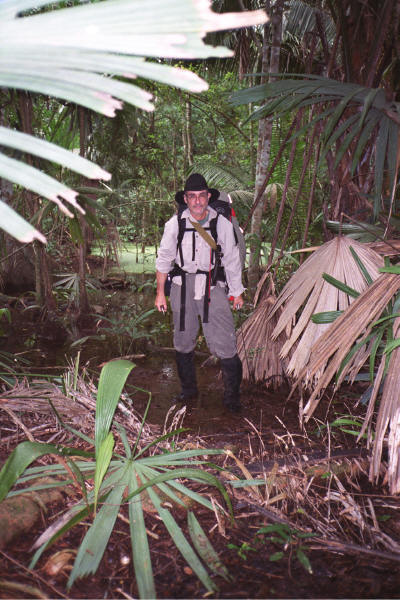
FEBRUARY 5
Dante Takes a Road Trip
You have to hand it to third-world capital
cities: they sure are chock-a-block full of the odd, the weird, the nightmarish,
the improbable and the impossible, an odd farrago of the sacred and the profane.
Whatever horrors occur in places like New York , Dallas and Chicago---leaving
out San Francisco for obvious reasons---rest assured that it is much worse where I am traveling.
Dante himself would be lost for words here.
These thoughts intruded as I began comparing
Guatemala City, Managua and Tegucigalpa. All three are congested, dirty, noisy
and crowded---but it is Guatemala City that takes the award in these categories---
sometimes dangerous but always entertaining. As for being cursed by God, it is
Managua in particular and Nicaragua in general that wins here. The most livable
city---or rather, the least unlivable---is Tegucigalpa. (But more about these
things in due course.)
None of these cities exhibits any sort of
planning whatsoever, unless the planners were also drug dealers who
regularly sampled
their own merchandise. All is confused, helter-skelter, gimcrack, nutso, here
and there and everywhere. Forget city maps. These are merely suggestions---and
besides, most streets have no signs in any case. (Now you see why mail is near-impossible
to send or receive.) Looking at a map while waiting at a corner would just label
you a dumb tourist ripe for plunder. And the labyrinthine way the streets and
avenues meander would confuse even the Minotaur. Cars have the right of way over
pedestrians of course, and you had best step gingerly to avoid having to visit
the local emergency room---believe me, these are best avoided. And if you do get
tapped by a vehicle---and survive---you will probably be in a cast, which means
that you will be easy prey for any wandering gang member. Like everyone's mom
always said, look both ways before crossing the street.
All these cities---in fact, every city, town
and village in Latin America---are centered around a plaza where one can find an
incongruously huge and glittering cathedral. In the midst of jaw-dropping
poverty these monuments to God are all works of art, gilded and bejeweled,
intricately carved and decorated, and all with a particularly bloody Christ.
These are not complaints---I am not Protestant after all---but simple
commentaries. They are as they are. Their wealth is all from voluntary donations
freely given---unlike the monuments in Washington DC, for example, whose
magnificence came from forced confiscatory taxation. Enter these houses of God
and you enter a place that is supposed to resemble Heaven: colored lights filter
through rose windows, incense is on the burn, a thousand candles all a-flame. If
you do not like it here than get the Hell out---literally.
Much of public life---and there is little
private life in these cities---centers around the market. All is for sale: the
junky, the trashy, the freshly picked and recently slaughtered. Some advice:
watch where you step, and tell your nose that there will be surprises coming.
What one sees in the street is nothing short of
appalling: intestines, feces, mountains of trash, leavings of fruit, squadrons of flies and a host
of mis-bred and malformed dogs fighting for the best pickings.
These canines deserve
special mention. They are all without exception scabrous, diseased, mangy,
cut-up and infested with ticks and fleas and worms. Some have fewer than the
standard number of legs, many have machete-chopped tails and heads. (Do not let
these grotesque beasts lick you,
and do not pet them.) Their legs are too short and their bodies too long, and
they have a habit of dying in the middle of the street on a regular basis.
Sometimes these corpses remain there through cooling and rigor mortis and
on to liquefaction. Who picks them up and where they are taken I have not the
foggiest idea---and I do not wish to know at any rate. (It just occurred to me
that there are always myriad Chinese restaurants near the market. Hmm...)
The slam-dunk gold medal prize for violence goes to
Guatemala City. Guatemala suffered a communist insurgency and guerrilla war for
37-odd years. After the so-called 'peace accords' the armed communist toughs---oh,
I'm sorry: the former 'freedom fighters'---simply changed their mentor from Karl
Marx to Alphonse Capone. Their guns were kept and used upon the populace, who also acquired
guns, and the fun began. The violence there is on a Colombian level. I scarcely
meet any Guatemalan who does not start a conversation with, "Damn this
government! When will it stop the violence?" Businessmen are regularly kidnapped---families
too---stores robbed, taxi drivers beaten and killed, busses hijacked in plain daylight and
policemen slain. Professional criminals go back and forth from illegal
enterprise to security work. Every bank and American establishment, from
Domino's to Burger King---and more than a few Guatemalan places---have a cohort
of well-armed guards. (A sawed-off shotgun is the weapon of choice, for obvious
reasons.) A few years ago a tour bus hired by an American university was
stopped on a busy highway under a bright sun. As traffic zoomed by a few feet
away the criminals pulled everyone off, robbed the men and raped the women---everyone
of whom was a college kid.
God has it out for Nicaragua. Pharaoh and
those plagues had nothing on this place. Consider its history over the past 30
or so years: an earthquake that left not one building standing in the capital of
Managua except the gringo-built Hotel Intercontinental, a revolution, a civil
war, foreign intervention, Hurricane Mitch, an Indian rebellion, attempted
genocide, a cholera epidemic, tremendous floods,
regular and terrifying volcanic eruptions---what a mess! All is broke down,
junked out, rusted and pot-holed, worn through and through, condemned and fit only for the trash heap.
I got to hand it to the Nicaraguans for hanging in there---as if these
poor souls had any other option. (While awaiting transport one
day a beggar approached. I could not see her very well from a distance, but I
could hear a loud buzzing, as if a thousand bees were about. As she got nearer I
noticed a smell like that of a two-week old dead cat. When she was next to me I
saw that her scalp had suffered a tremendous blow, probably from a machete, and
was hanging loose behind her head. Her hair and bleeding flesh were encrusted
with flies and maggots---thus the noise and the smell.)
And so I am making Tegucigalpa my center of
operations while in Central America. It is as chaotic and goof-ball as those
other capital cities, but still retains a bit of charm---at least as I define
it. Besides, the Hondurans try very hard to be modern. Newspapers here
are full of optimistic articles about how to increase tourism and bring in real
cash---along with more somber stories of Dengue Fever and gang activity. (Today's
headline and large cover story: "One thousand German tourists enjoy San Pedro Sula!" There were photos
of, well, a lot of Germans who did indeed seem to be enjoying San Pedro Sula.) And truth be known, there is more adventure tourism potential in Honduras than
in all of the rest of Central America combined. One senses a sort of buzz around
possible attractions. Even though Hurricane Mitch wiped out the equivalent
of the entire foreign trade earnings of Honduras---think of the USA losing a
couple of trillion dollars in a four-day perfect storm---these people are
friendly and disarming. I wish them well.
Heading for the Hills
Tomorrow I leave for Gracias, which is one of the entry points for Monte Celaque
National Park. It is time to go---it has long been time---as I am getting a bit
too well-fed here in the Goose. What delayed were the dentist and
Santiago---good things indeed, but now I will continue doing what I set out to
do: walk with pack and machete through the rural parts of Central America. I
have spent a great deal of time writing on the site, making changes and
transporting thought to web. It has been fun, but exhausting. When something
pops into my mind begging to be written, I have no real choice, I must
get to writing it. An addiction? Perhaps. The monster seems to be sated for now.
I will return to the Goose in ten days or so, and so there will be
no chance to write for a while. I will have other things on my mind, and it will
be best if I am not distracted.
From
Gracias---about five hours from Tegucigalpa---I will walk with all my gear and
seven days worth of food eight kilometers out of town to the park entrance.
Remember that this is Honduras. When you read 'park' do not associate this with
Yellowstone. The facilities are...well, this is Honduras. I will camp
there, and then the next day head 1000 meters up the mountain and set the tent.
The next day will be to the summit, where I heard there is another trail that
leads far westward to a bunch of Lenca Indian villages. I will let you know.
Stay tuned.
Bye...and later.
FEBRUARY 15
Peripatetic Montane Perambulations and Cogitations
I returned yesterday
from six days spent in Celaque National Park. It was a fine place, full of
cloud forest and excellent hiking. I climbed to the top of Monte Celaque, the
highest point in Honduras at 2825 meters. OK, no big deal if one compares it
with about any peak in Peru, but there you start higher. The total amount of
climbing and descending was about 4000 meters---not bad for six days. The final
day I walked from the highest camp site (2505 meters) all the way back to the
town of Gracias---20 kilometers away and 1300 meters down. My legs are still
useless. Beer helps take the pain away. So does Chinese food. And chocolate
donuts.
And it was cold up
there, much colder than I had thought. My little REI jungle sleeping bag was
barely adequate---no, it was inadequate. I was cold in my tent. I slept
at 2505 meters with socks, Gore-Tex oversocks, long underwear, long-sleeved
shirt, T-shirt, Gore-Tex pants, polar vest, polar fleece, jacket, wool hat,
sleeping sheet and in the bag, and I was still cold. I want to climb Monte
Babilonia sometime in early April, but not until I have a warmer sleeping bag
sent down. I hate being cold. Period.
I wanted to walk from
the summit of Celaque to another village, Belèn Gualcho, but it had rained the
day before and all was slippery. Imagine walking down a steep and muddy trail
with a heavy pack into some unknown cloud forest and you will see what I mean.
Besides, from the summit all one could see was clouds directly below. It was
rather eerie to be on a little point on a ridge and be surrounded by
nothingness.
Time for some rest here
in Tegucigalpa, and then head to Nicaragua for three weeks or so. I can hardly
believe that there are only three months to go in this year of living
dangerously. What the devil happened to all that time? All those journeys
through Peru and Chile and Argentina and Paraguay and Guatemala seem far away,
dream-like, fantastic. I read my own thoughts at the time on this web, and I
seem to be reading the travel journals of someone else, a stranger even. What is
going on here?
Now I am occupied
occasionally with thoughts of employment in June. I have also given thought to
what I will do if I do not find employment for the next school year. Sometimes
that idea is positively attractive, sometimes it seems like an idea straight
from loserville. And yet...there is something to the desire to wander
about for a year through God's creation in my own nation---along the Pacific
Crest Trail, for example. How else could I do that if not with a whole bunch of
time? And I still have Andean dreams: ridges unwalked, valleys untraversed,
frozen lakes lost and found. And I have not yet even mentioned the guitar---an
old friend who is making his absence painfully felt. Even as I walk I have Telecaster
dreams in shades of rhythm and blues. Hmm...seems like a time to
turn everything over to God and let Him decide.
However, there is
nothing solid yet, but stay tuned. There are lost cities and monkey gods to
find, and miles to go before I sleep.
FEBRUARY 17
Heading for the Hills Redux
Change of plans. Rather than head for Nicaragua, I will leave
tomorrow for more cloud forest and mountain stuff, this time in the Honduran
province of Olancho. The town of Juticalpa will be my base as I go off to
Gualaco and Monte Babilonia. I should be back in the Goose around March 3 or so.
Ten days later I will meet some ex-students for some very cool jungle
backpacking in Costa Rica. Thus, the reason for doing more serious backpacking
pronto: I must be in great condition when those guys arrive in Costa Rica. What
if they are in better shape than I? What if all those donuts and all that
Chinese food I have eaten while in Honduras makes me look
fat? I would never live that down, alas!
The province of Olancho is a bit rural and rustic, so I might
not be able to update the web for a while. In the meantime, I promise to try to
stay out of jail.
Bye.
FEBRUARY
18
I am continually amazed at how much Central America has changed
for the better since my first visit 20 years ago. Then all was dirty and
impoverished and politically disturbed; now the poverty is still there of
course---though less in-your-face---but all nations have improved economically
and politically, sometimes dramatically so. Part of this has been due to the end
of the regional wars that afflicted almost every nation here. In 1983 there was
either war or revolution---or both for always unlucky Nicaragua---everywhere,
and the USSR and its hand-puppet Cuba were up to no good financing this war and that
guerrilla army. The silly and pretentious and parasitical intelligentsia of Latin
America---Chè pretenders the lot of them (and almost as malignant as our own
professoriate)---wholeheartedly supported all this,
perhaps in their adolescent heart of hearts yearning to come to power
themselves. (And sometimes these bookish types did: witness the career of
Sandinista poet and dreadful little cad Ernesto Cardenal. This girly-boy crybaby
once declared that the reason he could not write poetry was because of Ronald
Reagan---yet another success of Reagan's foreign policy.)
Speaking of whom...when Reagan came to power in 1981 he vowed
not just to contain communism in Central America, but to 'roll it back' and
defeat it. And truth be told he had his work cut out for him after the four
years of Carter incompetence. But Reagan was as good as his word. With US cash,
military advisers, support for anti-communist movements and a will of iron he brought
democracy to the region (by Central America standards, that is) and began the
process of radical economic and political reform. The results are clear
to anyone who was here then and who is here now. Even the 'accursed by God'
Nicaragua is better off now that the Castro-wanna-be Sandinista thugs
have been voted out of power and have returned to their dreary poetry
seminars. In fact, the Nicaraguan cities of Leon and Granada have become sort of
hip places to hang out.
Honduras itself is most certainly a different place now than it was 20 years
ago (even the girls are prettier). Travelers still normally just stop at
Copàn for a day and then head to Nicaragua via Tegucigalpa, but there are more
of them---and they are beginning to venture out into the astoundingly beautiful Honduran forests. Truly Honduras has more eco-adventure-tourism-type
possibilities than all its neighbors combined. This is why I have chosen to see
as much of the place as time allows---time being defined as between now and June
1. It is somewhat shocking to be in a cattle town in the Honduran
countryside---Juticalpa, that is---and find internet cafes where I can work on
my web site. Yes, things have changed here.
OK, there is still trash everywhere---though less of it---and
the Hondurans still spit too much (though "Please Do Not Spit" signs
are obeyed more often than not), but hey! While traveling one takes what one can
get.
I head to Gualaco tomorrow as it provides access to the
mountains surrounding Sierra de Agalta National Park. Monte Babilonia hides behind
some clouds thereabouts, and I there I go to seek her.
Bye.
FEBRUARY
26
I returned yesterday from venturing into Sierra de Agalta
National Park. I walked five days---no, I climbed three and descended two.
Seldom was there any level ground to walk upon. All was steep, and not entirely
pleasant. The route to the summit at La Picucha (2500 meters) was not marked.
There were many downed trees blocking what remained of the path, which looked as
if it had not been hiked in some time. I had to constantly use my machete
to clear the trail. There was much mud---again! Sierra de Agalta has no
infrastructure, so one is basically alone and without map or useful advice about
what to expect. To top things off, on the third day I reached the ridge that led
to the summit, only to find there was no water. I searched up there for four
hours with no luck and was forced to spend a thirsty night in my tent. The
nearest water was three hours away---straight down. There were howler monkeys
about, but they were heard and not seen---a good thing, as I despise them and
all of their simian cousins.
Was it worth it? Yes, but barely. The forest was your typical
cloud forest that one can find anywhere between 1000 and 2500 meters all through
the tropics of Central America. Nothing extraordinary, and I have seen it all
before. (And no, I am in no way jaded.) What was indeed a payoff of this hike
was that it well prepared me for the more strenuous one coming in March in the
Costa Rican jungles. Then I will be with some very cool ex-students from Lincoln
School. I had better be in superb shape or I will make a fool out of myself---a
state with which I am well acquainted, truth be told. And soon to come will be a
seven-day walkabout on the Nicaraguan island of Ometepe.
So I am back in the Goose recovering. It is my knees that need
this the most. Yesterday at Mass---it was Ash Wednesday---when I went to kneel
down the knees screamed at me. They need rest, and they will get it. And my
stomach will get its share of attention too, for there is yet much Chinese food
and donuts to eat. Oh yes, and beer to drink. (After all, I am not a Baptist.)
And what am I to give up for Lent? Chocolate? Beer? Hmm...let me think a bit.
I'll get back to you after dinner.
Or I could take the advice of
the Senior
Pastor at Irvine Presbyterian Church, Mark Roberts. He says that a
perfect Lenten preparation for Easter would be to read the Gospels one chapter a
day. True, that is a fine idea at any time, and I have just begun a study of
them, starting with Matthew. My Catholic Study Bible was (as usual) in my pack
while walking Sierra de Agalta. I would have it no other way.
I need sleep. Bye.
FEBRUARY 27
One Day on the Trail

Here I am resting three days ago in Sierra de Agalta National Park,
covered with mosquito and ant bites and a few ticks, filthy with dirt and sweat---and knowing
all the while that a cold beer awaited in Gualaco. I sat because while chopping
a bit with my machete I felt a wetness pour over my hand which made the thing
hard to grasp. I thought it was sweat, but it was my own blood. I had wandered
into some type of thorn bushes without knowing it. I was otherwise engaged and
concentrated, it would seem. Anyway, it was a fine time for a break and a good
photo op.
There is a certain scent that one takes on around day three
while doing such things as I do. It is a combination of old sweat, new sweat,
bug repellent, sun block, rotting plant life, dried saliva, animal feces, spilled food, dirt,
mud, blood and the pulp of crushed insects---not quite Paco Rabanne. It is unerving at first,
but then one accustoms---as one always does in such situations.
At times when I am so engaged I cannot wait to get back to what
passes for 'civilization' in the region through which I am traveling.
Mostly though I simply revel in the glory of where I am at the moment: all of
God's Creation all around and everywhere, dwarfing and consuming. I walk
entranced, dreaming, fulfilled. No material thing, no merely physical pleasure,
can approach this. Was it so before Eve ate the apple? Will it be so once again?
No, it will be better. Don't believe me? Then you do not believe.
FEBRUARY 28
La Prensa de Hoy
One good way to 'get
inside' a foreign country is to read its print media. Now, a journey to Hungary
or Finland might present problems, but many can work their way around a Spanish
language newspaper. Here in Honduras the number one daily is
La Prensa. So let us take a look at
today's edition and find out what is of interest and importance to Hondurans.
On the front page is
Cuban
refugees land in La Ceiba. It seems a group of 14 Cuban fishermen
spent one month at sea trying to get to Honduras. They said they would not
return to Cuba, as they had heard good things about Honduras and wanted to stay
there to find a better life than the one they had in Cuba. Now, I can well
understand Cubans (or anyone) who wish to come to the USA however it can be
arranged---by boat, airplane, life-raft, inner-tube, pogo-stick---but to
Honduras? Please do not get me wrong, I very much like it here, but the
quality of life here is...well, this is Honduras. Well now, just what does this
desire of the Cuban fishermen say about Castro's socialist paradise? If Cubans
prefer even Honduras to their own island...I mean, damn!

Can we
stay?
On page 9 we find
Evangelical Pastors Ask for Public
Acceptance. It seems that Protestant Christianity---the
Fundamentalist, conservative sort that is---is making great headway in Central
America, especially in Guatemala. In Honduras it has run into some difficulty,
however, especially from the Catholic Church which enjoys special privileges
here. The Church is losing a few adherents, most of whom flee to the Evangelical
churches. Now, do not get me wrong---no one can 'out-Catholic' me. I am as
orthodox as the pope. I love the Church; I need the Church. But if some
Hondurans (for reasons known only to God) can only find Salvation in another
form of Christianity, then they should be able to do so without any troubles
from anyone. After all, these Protestants are against all the right things:
abortion, homosexual privileges, immorality and so on. They speak with authority
and are remarkably strong-willed and dedicated to Christ.
(Would that my faith were as strong as that of these Evangelicals.) More power to them.
Better to be Protestant than to burn.

Can we
pray?
On page 17 we find a
public service announcement. It concerns Dengue Fever, for which there is
neither treatment nor cure. There has been an outbreak of it here, especially
its most virulent form. This plague is carried by mosquitoes, and this being
Central America, these pests are ubiquitous. The announcement's headline reads
She is no longer with us,
below which is a photo of a beautiful seven-month old child named Blanca Lorena
Almendarez. She will never see eight months, as she died of Dengue. The
announcement reads "Dengue knows no special level of society or age, it only
attacks and kills." Open letter to God from me: "Dear God: Why did You make
mosquitoes?"
In the 'Living' section---yes,
Honduran papers have these!---we find
The Baths of Cleopatra. In the age-old desire of the female of the
species to indulge itself in exotic beauty treatments---and what could be more
exotic than Cleopatra's baths?---the article gives helpful tips about bathing
with milk and with rice water. It recommends using common kitchen spices
to smear on the skin---stuff like olive oil, salt and lime juice to remove 'unwanted
colors'. I do not know about you, but being around a woman who smells like some
bizarre pesto sauce does not really appeal. Still, Cleopatra was known for
having written a manual on cosmetics and for taking---how does one say it?---rather
interesting baths. After all, she kept Julius Caesar and Marc Antony well and
exotically entertained for years, so perhaps there is something to the article.
On page 41 we find in
the 'International' section O'Donnell
Marries in order to Defy Bush. There was a photo---blessedly small---of
the remarkably fat and wholly unpleasant Rosie and her lesbian...um...'partner'. They
seemed in high spirits with flowers in hand as Rosie bellowed into a microphone.
She---she?--- was scowling mad---is she ever not so?---because Mr. Bush
will support a constitutional amendment in favor of man-woman marriage rather
than one of the myriad San Francisco varieties. So she 'married' her bosom buddy
simply to irritate Mr. Bush, to let him know of her 'outrage'. Gee, call me old
fashioned but does not one marry to express love and a desire to share a home
and child-rearing? Why would one marry simply to make some stranger mad? Anyway,
here is the grotesque couple in a yahoo photo on their way to wedded bliss and---one
hopes---to Cleopatra's baths.

We're
so gay!
I often wonder what
Latin Americans think of all the perversion that exudes from El Norte: from
Hollywood, from MTV, from Super bowl half-times, from San Francisco's streets,
from Rosie O'Donnell's mouth, from Massachusetts judges, from Bill Clinton's antics. After all, Latins are
remarkable for their stable and large families and strong and traditional values.
But I wonder no more! On the 'Opinion' page we have...well, it speaks for itself.
Abominación

And that would be all,
folks!
Rat
Race
I was walking
home---OK, to my hotel (it feels like home since I have spent many nights there
all told)---when I noticed a commotion among some Hondurans on both sides of a
busy street. I looked for the cause of this merriment and saw a gray,
long-tailed rat trying to cross the road. The creature was having a difficult
time making it as there was much traffic about. It would skitter part way
across, but then would head back to the safety of the sidewalk as some taxi or
car tried to run it down and send it to rat Heaven. The beast's perplexity
brought great hilarity to the human onlookers. Many people stopped walking only
to observe the animal's plight. Finally, as if there had been a 'rat god'
somewhere directing things---rattus ex machina?---the rodent made it
across, to the applause of the crowd. It stuck its snout into a tossed out
McDonald's hamburger wrapper and began to nibble on some hidden leftovers. The
crowd, once easily amused, now became bored and went about its own business. I
thought for just a moment of kicking the rat from here to eternity but thought
better of it. I continued my journey to the hotel. The last I saw the rat had
emerged from the wrapper and was headed for the door of a donut shop.
Off To Nicaragua
Tomorrow I take a 9 hour
Ticabus ride to Managua and then a microbus to Granada the same day. It will be
tough to leave the Goose as I have gotten quite used to beer and donuts and
Chinese food. And I have much enjoyed being able to write to my heart and soul's
content on my site. As I have written before, when something pops into my head
it begs to be written down. I really have no choice in the matter, and I cannot
be comfortable until I get it out.
Granada is on the shores
of Lake Nicaragua, and from there I will boat it to the island of Ometepe. Some
hiking with neither tent nor stove is in order, as I will try to make it all the
way around the island, staying in the odd hotel or shack. I need to be back to
Granada and off to Matagalpa on the 8th or 9th to meet a friend of mine, an
ex-student of Lincoln School. From there off to Costa Rica to participate in a
real life buddy movie in a very tough jungle with some very cool guys.
Some say that Nicaragua
is wildly entertaining and that I should stay longer there simply to get a feel
for the place. Well, no. I am traveling to backpack---the purpose, after all, of
this 'year of living dangerously.' There will be time enough later in life for
tourism. Besides, there is not much backpacking in that country, truth be told.
Honduras is where the real adventure is.
So perhaps no web
updates for awhile, as who knows if there will be the proper software in
impoverished Nicaragua? Until then...stay out of jail.
Bye.
MARCH 1
Sandalistas
I am
in Granada, Nicaragua on the shore of Lake Nicaragua. Surprised again am I by
the Internet takeover of Central America. The place where I am now working has a
superb connection---faster than the one I had in Argentina---and has the
software I need to write on my web. So, the addiction gets fed today.
Granada is a colonial gem, the finest example of it in this country---which of
course says not a lot as this is Nicaragua. Nicaragua went through so many years
of revolution, counter-revolution and civil war---not to mention terrifying
earthquakes and volcanic eruptions---that hardly a building has escaped some
type of destruction---except here, more or less, and the island of Ometepe. Now
Granada is experiencing a tourist renaissance of sorts, as foreigners flock
here. An entire host of things have sprung up to satisfy them: hotels---not
nearly enough---cool little coffeehouses---all of which offer the superb
Nicaraguan coffee (I am in java Heaven)---and regular boat service across the
lake to Ometepe.
The
place is hip for sure, in the same way that Antigua, Guatemala is hip---and to
tell the truth, Nicaragua tries very hard to be so. My first visit here
was in !983 during the Sandinista era. The 'revolution without frontiers' was in
full force then. Young Sandinista soldiers were everywhere, with a cool Chè-type
swagger and brandishing AK-47s. (Posters of the Argentine revolutionary are
still all about.) Because the Sandinistas openly and brazenly allied themselves
with Cuba they earned the unwelcome attention of the US. Thus, the Contras, more
war and so on. But international leftist-types---all those feather-brained coeds
and skinny chested sociology majors and bearded philosophy professors and
itinerant campus rabble-rousers---poured into Nicaragua to give that nation
their support, such as it was.
What
they mainly did was to join 'international coffee brigades' whose organizers
herded all that leftist flotsam to coffee plantations that had a dearth of
workers. (The workers were in the Sandinista army.) So off to work they went,
with shovels in the air and singing the Internationale, these 'sandalistas'.
After a few weeks of real work these saviors of the world would head back to the
air-conditioned and pampered comfort of campus life in the USA, there to
regale the ignorant and silly with tales of daring-do and heroism in protecting
Nicaragua from the evils of American imperialism. At any rate a stint in the
brigades seemed a great way to pick up college chicks. (And there was a rumor going about that the brigades were a good place for American co-eds to rid
themselves of their virginity, but I have been unable to verify this.)
I met
scads of these touchy-feely leftist creepy-crawlers both during my travels to
Nicaragua and while in college. Odd, those who were in the US were bombastic,
shrill, loud---all long-haired and finger pointing. The 'sandalistas' I met in
Nicaragua were a different breed. We would often debate the politics of Ronald
Reagan and Daniel Ortega over (many) beers---this beverage being one of the
international languages for sure. Usually we ended up laughing, I by accusing my
opponents of communism, they by accusing me of being in the CIA. (To put it
briefly, I was right and they were wrong.) Anyway, the beer was good, the
conversation refreshing and the experience better than any Political Science
seminar.
Those
days are long gone now, replaced by Internet cafes and myriad restaurants, and
those ex-sandalistas, now a bit gone to seed. drive SUVs and carry American Express cards. The beer
here is still cold, however, so all is certainly not lost. Last night I was
sitting at a table with a Canadian and an Australian---all of our countries being
former members of the British Empire, by the way---when we all marveled at the
quality of cuisine to be had in this once Sandinista socialist workers paradise.
And we were not oblivious to the beauty of Nicaraguan women either. (They got
prettier and we got handsomer the more beer we drank, but this happens
anywhere.)
I
think I will hang out here until tomorrow at least. Then, probably off to Rivas
and San Jorge, from where there are several daily boats to Ometepe.
MARCH 8
Today I returned from the island of
Ometepe. I traveled there because, as one prominent guide book says, "it is the
highlight of any trip to Nicaragua" with "the friendliest people in the country."
Well, OK, though I found it somewhat different from that breezy description
Look, I am not traveling to visit chic or trendy areas of any country or to have
a 'cultural experience.' I am traveling to backpack. Period. I have
traveled many times all through every Central American nation beginning in 1983.
What I want now is to push my physical and spiritual limits while traversing
God's acres. To put it briefly, Nicaragua offers very little backpacking and
very little solitude. (Of course it offers many other attractions---Nicaragua is
beautiful, and I have only seen a small part of it in my three visits---but I am not
buying right now. Maybe later.)
Ometepe is a case in point. From a map it appears that one
could simply walk around the entire island, taking around 7 days. And
technically, one could do this. But---and there is always a 'but'---there is
absolutely no shade to be had (and the sun is serious business here). All is dry
and dusty to boot. And once you leave Bagues, the last real village on the
north-east part of Ometepe, there are no villages. If you have no tent and are
relying on places to stay---I left all my camping gear in Granada---you would
be out of luck. And there is more: Water is very scarce everywhere on the
island, in all hotels and restaurants and homes. It simply quits, sometimes for
the entire day. And the island sits in a huge freshwater lake! Granada, the
third city of the republic, also suffers from water problems, and it is on the
shores of Lake Nicaragua.
While the Americans look for water on Mars, the
Nicaraguans cannot seem to find it in their own backyard. It baffles.
There are other reasons why the island did not appeal to
me. It is chock-full of child beggars, for one thing. Also, Ometepe has become a
haven for the North American and European New Age tribes that wander around
certain parts of Central America. They are the same sort that infest Panajachel: the entire hippy
touchy-feely types who dribble down from Mexico and Guatemala---stopping at
every tattoo and piercing parlor along the way---and congregate in places such as
Ometepe. There they disrobe, imbibe, inhale, and idle away their time. It
pleases indeed to know that I never see these types in the forests and jungles
that I love.
So I am back in hip Granada---and it has water today. In a few days I bus to Costa
Rica, there to backpack with some very cool guys. And I have already decided to
fly from San Jose back to Tegucigalpa. From 20,000 feet I will be able to look
down upon thirsty Nicaragua.
APRIL 1
I feel as a stranger writing on my site again as almost one month has passed
since I have had the luxury of doing so. And what a month! Granada, Ometepe,
Lake Nicaragua---and the highlight of about everything, a nine-day backpacking
trip in Costa Rica with five ex-Lincoln students. This adventure has its own
page here.
Anyway, I have much to say---when do I not?---but now for the first time
during this 'year of living dangerously' I suffer under the constraint of time.
Briefly, I have less than two months to go before I am back in the US, and there
are still miles to go before I sleep. I leave tomorrow for La Ceiba where I will
finalize the plans for the most difficult part of this entire year, a 12-day
solo walk in rural Honduras from the village of San
Esteban to Dulce Nombre de Culmi to Paya, and then on to Sico and the jungles of
the Mosquito Coast. After this I return to Guatemala to walk through the jungles
there from Carmelita to the Mayan ruins of El Zotz and on to Tikal. After this,
a well deserved break in my own nation. Which reminds me...
I have decided to return to the US of A permanently. I have not lived or
worked in my own nation for 11 years. Time to rediscover a place that Americans
with good reason call `God's Country´. What this means is that I will be back in
Oregon around May 10 or so, there to buy a car---my first in 28 years---and a
cell phone---my first ever---and then to load up and head out on a nation-wide
job hunt. (Of course, much Internet spade work will be done before hand.) And I
will walk 300 miles across Oregon from the Columbia River
to the border of California. And buy another guitar. And find an apartment. And
stay out of jail. And so on.
But all of this will not arrive until May. Until then there is a wild
Honduran trek to finish. And much, much writing to do at my site, but not nearly
enough time for commentary---only travel stuff. Too bad, as I have page after
page of ideas to put down. Some other time perhaps...
Except for one thing: Bush is not Clinton and Falluja is not Mogadishu.
Prepare for...well, let a US general speak about the certain American
reprisal for killing her people and dragging their corpses through the streets:
It will be at a time and a place
of our choosing. It will be methodical, it will be precise and it will be
overwhelming.
Go for it. But have a drink first, as this is
not going to be pretty. No room here for New Testament
Mercy. Now is the time for Old Testament Justice.
Bye---and do not forget that drink.
On February 27 I wrote:
There
is a certain scent that one takes on around day three while doing such things as
I do.
It is a
combination of old sweat, new sweat, bug repellent, sun block, rotting plant
life, dried saliva,
animal
feces, spilled food, dirt, mud, blood and the pulp of crushed insects---not
quite Paco Rabanne.
It is
unerving at first, but then one accustoms---as one always does in such
situations.
After hanging out with
the boys in the jungle for nine days, I need to add 'the smell of stale
tobacco, yesterday's rum and sea brine.'
APRIL 4
I have been in La Ceiba a few days preparing for the penultimate journey of
my 'year of living dangerously'. With every visit I like this place more and
more. It is friendlier and more laid-back than the rest of Honduras. Coastal
people in tropical Latin America tend to be more open and less traditional than
their fellows who live elsewhere. Think of Rio and Sao Paulo, or of Guayaquil
and Quito. Anyway, here I am enjoying writing on my site and eating great
food---until tomorrow, that is, when a 6 AM bus will take me far into the
province of Olancho to the village of San Esteban. This tiny place was for
ten years the scene of a rather sordid series of murders between two families.
More than 80 members of both families were killed in a clan war until the army
stepped in to end it. Soldiers are still there to enforce the truce.
Anyway, I will stay there tomorrow night and then on Tuesday begin the first
part of my plans, a 30 km walk to the village of Dulce Nombre de Culmi. This
will take two days, and then I head north by foot or truck to the village
of Paya. (Do not bother looking for it on a map.) From Paya the way is all mule
track and must be covered on foot. (I refuse to ride mules or horses as I hate
these things. They smell, they are stupid and they are bigger than I am.)
In five to seven days I will---I hope---reach the village of Sico in
Mosquitia. From there I will get a boat to the coast at Palacios---about two
hours or so. This place is one of the entry points for Mosquitia, the largest
jungle area in Central America.
Stay out of jail.
APRIL 13
Mud and Blood
I returned two days ago from an unpleasant three-day hike from
San Esteban to the village of Dulce Nombre de Culmi. It was unpleasant for a
variety of reasons. For one thing, there was not much to see as I crossed the
Sierra de Agalta mountains. Much of the land has been deforested and there was
little shade---and it was blistering hot always and everywhere. The mule
track between those two villages has been severely chopped up by beasts of
burden, and the mud was the worst I had been in since Guatemala in December.
There were armies of ticks scurrying through the dirt, and their attaching
themselves to my flesh was a constant annoyance.
Of course, I have been through all of this and more many times.
What really destroyed whatever enjoyment was to be had by walking through this
part of rural Honduras was the ever-present threat of violence. I scarcely
passed anyone who did not warn me of roaming gangs of thieves and killers
lurking about in the hills and preying upon all and sundry. One man on horseback
I ran into was armed with both pistol and shotgun---and he was afraid. He told
me tales of thieves hiding off the trail who had robbed him twice. He absolutely
refused to allow me to camp on a riverbed where I had set my tent and strongly
insisted that I camp in his front yard. I was a bit spooked by then and so
complied. Just how safe I was camped there was clear the next day. He pulled out
his complete armory, which included a Chinese-built AK-47. I tell you, if any
gangs raid his home they will get a faceful of bullets for sure.
I decided then and there that my plans to head north toward the
Mosquito Coast were out of the question. Besides, there had been rain up north,
which meant more oceans of mud---no thanks. To top things off, the village of
Dulce Nombre de Culmi was borderline hostile. The people were indifferent and
suspicious, and the "hotel" I stayed in was the worst I had seen, a truly
ghastly place filled with insects, ancient filth, blocked plumbing---if that
bizarre series of oozing pipes could be termed such---a terrible stench and
shady characters. But wait, there is more: Because I arrived there on
Passover Thursday, there would be no transport the next day, Holy Friday.
So I was stuck in this pestilent s*** hole ( pardon the expletive, but I am in a
foul mood) for two days. But wait, there is more: There were no places to eat in
this damned place. I lived off beer and stale bread, and a dish of typical Honduran food that a woman agreed to make for me. Returning to Tegucigalpa was
like crossing the Jordan River.
And I praise the Risen Lord for bringing me out of that
forsaken spot.
Enough Already
I have had enough. I am
tired, bone tired. I have simply had it with:
Sweat soaking my
clothes and running down my face.
Being always covered
with insect bites.
Drinking iodine-laced
water.
Taking cold-water
showers.
Going to Spanish
language Masses.
Speaking Spanish.
Arguing with taxi
drivers.
Hustling about
in a search for a bed when I enter a city.
Walking through
populated areas with a loaded pack.
Being the center of
attention while traversing rural Latin America.
Smelling like a goat
while backpacking.
Always preparing for
or cleaning up after a backpacking trip.
Pretending that I have
more lives than a cat.
Pushing myself beyond
any reasonable physical and mental limits time and time again.
Always being ready to
deal physical violence if the moment calls for it.
Look, in this past 'year
of living dangerously' I lived at an accelerated pace. I took all sorts of
chances and won them all. I accomplished most of what I had set out to do,
and some that I had not. I ran into extreme cases of mental disability,
unspeakable cruelty and astounding kindness. I felt the presence of both Christ
and Satan, One always saving, the other always tempting. I read 34 books and
sent hundreds of e-mails. I drank perhaps 500 bottles of beer and one bottle of
rum---a necessary expenditure. I spent hundreds of hours before computer screens
while writing one million words and perusing thousands of internet pages of
news. I walked the world's deepest canyon and strolled weeks through Andean
peaks---sometimes lost, sometimes found, always entranced. I slept in
pre-Colombian ruins and an astoundingly luxurious inn. I gave away a lot of
dough and spent far more.
But enough already. I
want out of this place. I want to come home---home to America the Beautiful,
God's Country, the envy of the world, to be precise. I am as a stranger in
my own land, where I have not lived or worked for 11 years. I need to rediscover
her, soon and very soon.
APRIL 17
Back in Antigua
As the title says, here
I am. I changed my United ticket today in the capital and will be back in the US
of A this Wednesday. Believe me, I am quite ready. I have lived a bunch of lives
since June and have taken a bunch of chances---too many, to be truthful about
it. One cannot be lucky every time (although I was).
When I get to Portland
there will be much to do. I will have four months to find a suitable job. I can
move anywhere in the US, but I will choose a Bush state---Oklahoma, Wyoming,
Montana---and a small rural town. I want as much as possible to be around my own
kind. But all of these details big and small, are in God's hands. They are safe
there. If all depended upon me alone all would go awry.
Anyway, once I have a
fair idea of how the job search will go I will head for the forests around Mount
Hood, about 70 miles from the city, there to spend some days walking about and
breathing the clean air that God made for His pinnacle of Creation---umm, that
would be you and me. This is a fine way---the only way for me---to re-enter the
life of my nation.
When I think of it, I
have lived or worked or traveled for more than 14 years outside of America. That
is about one-half of my adult life. Living in the States again will require
adjustments to be sure. There will be surprises. I will have to get used to some
unusual things, like:
Clean water.
Hot water.
Machines that work.
Laser quick internet.
Efficiency.
Not taking malaria
pills every week.
The use of real
money---that would be dollars.
A lack of trash
everywhere.
Laws that are actually
enforced.
All the books and DVDs
and CDs and magazines and stuff delivered right to my door.
More beer selections.
Not carrying a machete
while walking in the country.
Myriad Thai, Mexican
and Chinese restaurants.
Myriad consumer goods.
Wheat Chex.
Marble Fudge ice
cream.
Starbucks.
Cooking at home.
Soap, toilet paper and
hot water in public bathrooms.
No beggars.
Cheap cars.
Cool clothes.
Playing my 11 guitars.
A fine high-end audio
system---mine.
Not sweating all the
time.
Buying my first
hand-gun.
Man, these will be
tough, but I think I can handle them.
APRIL 13
Have Gun Will Travel

With farmer's AK-47
near Dulce Nombre de Culmi.
Bring 'em On!

Honduran farmers await
gang members near Dulce Nombre de Culmi.
APRIL 20
Today is my last full
day in Antigua, and perhaps my final day in Central America. I do not feel sad
or anything of the sort; I feel relieved, actually. All that I have wanted to do
here I have done. There simply is no reason to hang around. It is time to head
home and begin a new chapter in my life.
I cannot say the same
about South America, however. Something about the place---the Andes, for
one---will draw me back I am sure. Even now I dream Andean dreams and think of
things Chilean and Argentine: Bariloche, Patagonia, myriad lakes and forests,
crystalline glaciers, air so clear and crisp it hurts to breathe. I could very
easily head down sometime in October (I have a free ticket to Rio) and work my
way south to the island of Navarino by March, and then head north, reaching
Arica by June.
Ah...but job and
responsibilities you say. I know, I know. But if these things were the only
important stuff in my life, I would not be...well, Mike Austin---whoever he is.
(Obviously I have been thinking about this.) But more than likely I will be
working somewhere in the US this September, God willing. If not, it will be time
to load up the pack.
In a nutshell: If I get
a job, God has spoken---He wants me to work. If I do not get a job, God has
spoken---He wants me to travel. (If I win the lottery, God has spoken---He wants
me to buy a new high-end audio system.)
What would people say!
Not that it would matter much. Or that I would care much.
Someone once called me
the freest man she knew. Still true.
All Highs, No Lows
This is the last entry of my sabbatical. I will
write again for sure---too much, depend upon it---but not until I return to
God's Country. This 'Year of Living Dangerously' will be then officially over.
Is there a summation? Some clever words or advice I can give? Not really. This
past year is not so much a done deal as it is a work incomplete---much time must
pass before all of the year is understood. Think 'impressionism' rather than
'classicism'; Manet rather than Michelangelo.
Which does not mean I have nothing to say. All who
know me know that this would be quite impossible. What has happened to me since
June? Well, a lot. To write of the highlights would be enough---for now---to put
the year in some sort of place. So what were these high points? Well, there were
a lot---a whole lot. In no particular order of importance...
All was new. I went to places I had dreamed of but
never visited. Iruya, Argentina---a type of village one cannot find elsewhere:
shimmering in frozen sunlight, shockingly beautiful huddled beneath its
canyon walls, hovering in crystalline air. Putre, Chile---a delight, all small
and comfortable, guarded by a family of ice-capped peaks, living under
sun-soaked days and frozen nights. Cotahuasi, Peru---the deepest canyon in the
world, home to Inca who still speak Quechua, reached by vertigo-inducing stages
of descent (and not for the faint-of-heart), where the route passes
pre-Colombian ruins. Camp there---you will be alone---and hear the voices of
Inca long-dead.
And the friends along the way! Eddie and Julietta
and Adrian in Lima---known for ten years; Chip and Lucia and family in
Santiago---truly a family blessed by Christ; Wilma and Vanina in Rio--real
cariocas, alive to life, beach addicts and friends forever. What they showed
me of Rio cannot be garnered at any price; the brothers Mario and
Leonel---Guatemalan all the way, whom I met all of 21 years ago, to whom I owe
much (the Spanish language, the volcano Pacaya, pepian, a love of
Guatemala); and the unique Lauren---Yale grad, bright, beautiful, poetic---she
is Irish after all---all of 22 years young, out to save the world---or at least
the Central American part of it.
And ex-students! They were everywhere; Adrian in
Lima, Paula and Giulia in Cuzco, Vanina in Rio, a whole swath of them at the
American School in Rio, and those '5 Cool Guys'---Jeff, Matt, Sebastian, Erik,
Nathan---in the jungles of Costa Rica. After hanging out with them, it was time
to come home, as nothing could beat the time we had out there in wilds. Nothing.
Cities long-dead drew me to Peru; they draw me
still: not Machu Picchu
this time---that I had conquered long ago---but the ruins of the Chachapoyan---a
vanished threat to Inca imperialism who left behind the astounding '7 cities of
the Condors'---Kuelap, Gran Vilaya and scores of others yet uncovered;
Choquequirao, an Inca site that dwarfs even Machu Picchu in its spectacular
setting in the high Andes. Walking there and then continuing across two Andean
passes---120 kilometers of footwork, 10,000 meters all told up and down---took
every ounce of my physical and mental discipline---but it was Christ who carried
me; the Hellishly hot Paraguyan Chaco, abandoned by God except where His
Mennonites have settled, the only light in near absolute darkness; Rio, a city
that boasts the finest location in the world, cursed by a venal and corrupt
political class, diseased by a nightmare of narco-violence---but all the while
enjoying the blessing of the soothing, oh-so-democratic and rejuvenating beach.
Then I was yet again in Central America, which I had
first visited in 1983. All was new and transformed ---except the jungle, for
only God and timber companies can do that. Tim and Kristina, lovers of God and
some of the finest people on earth, met me in Belize and together we went
to the Mayan citadel of Tikal; one week later I became lost near those ruins and
almost gave up the ghost after wandering for hours---thank you Lord for pulling
me out of there; a climb to the Honduran Mount Celaque reminded me of Oregon,
and I became aware of the first intimations of home; cool and hip little
Granada, Nicaragua---like Flores and Antigua in Guatemala, and Copan in
Honduras, this place reeks of leisure and culture. If you are bored here you are
dead.
So there it is, both too long and not nearly long
enough---and all is still too fresh to really come to grips with. With time and
beer and many Masses I will understand more of all that has happened since June.
I will certainly let you know when I do.
There is yet one thing I need to say. I am different
to be sure: stronger physically, mentally, spiritually. Whatever limits I had
have long been pushed outwards and upwards. I have at times thought myself
invincible---foolish, I know, but if you had been there on those frozen Andean
peaks, all alone, far from civilization...well, you get the idea. And it is not
peace and quiet I yearn for; I yearn to rediscover my nation---and to do this
the way I want, with tent and pack (and gun). This part of my life, this 'year
of living dangerously', is over. The rest of my life will follow. I am in no
hurry.
Bye.
Goodbye to All That
It had to happen some
time---I am finished with my year-long walkabout, and thus finished with writing
about the oddities that are common when one hits the foreign road with pack and
tent. From now on, writing will be concerned with things more or less domestic:
economics, history, politics, theology, culture, backpacking in the US, and the
odd picture or two.
And it was a bit
unsettling---and shocking---to realize that what I had planned to do for years,
what I had dreamed of doing for years, what I had threatened to do for
years---was now over. Done. Finished. Completed. Wrapped up. Thanks for the
memories. Close the book. Now let's move on, Ok?
Right now I am sitting
in the Guatemala City airport awaiting my United flight to Los Angeles. Last
night I went to eat Italian food with my two Guatemalan friends Mario and his
brother Leonel. I first met them 21 years ago during my first journey down here.
Mario had just started a Spanish school, La Escuela Tecun Uman. His was the
third such school in Antigua. Mario was a forward-looking sort, as 1983 was a
time of extreme violence in Guatemala. Civil war raged in the hills and cities.
It was a brutal affair---but then, all Latin American civil wars were such.
There were few tourists, of course, but as peace came they began to flood into
Antigua. Now the school is filled with students from around the world.
It was tough to say
goodbye, as I said it not just to Mario and Leonel but to Antigua, to Guatemala
and to Central America. Right now I can see no reason why I would ever return.
All was said and done in my eight journeys to the region. And I am not the
nostalgic sort; I would never return to a place only to relive past victories.
There are too many future victories that will claim my time.
Tomorrow begins another
sort of life from the one I have been living for 11-odd years. There will be
surprises. I look forward to them. I hope they don't hurt too much; I hope they
don't cost too much.